



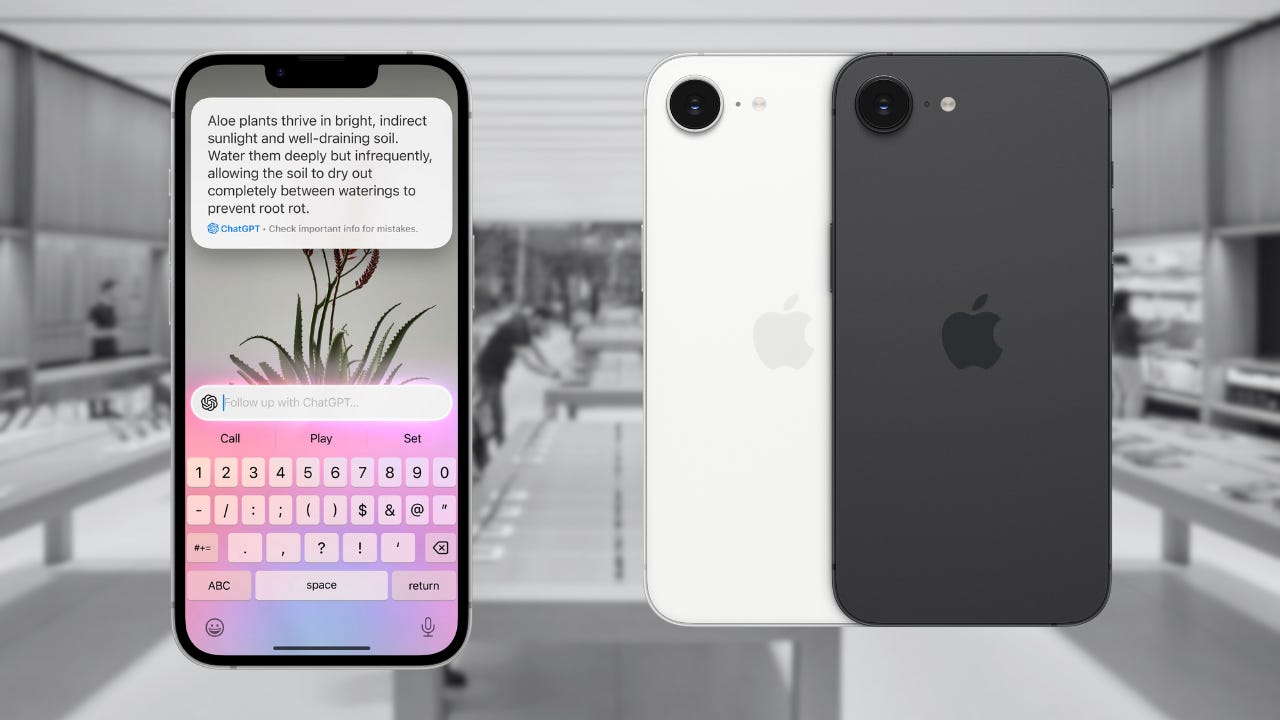

🍎 iPhone 16e is essentially the 4th gen iPhone SE with big changes
🧠 At $599, it’s the cheapest way to get Apple Intelligence on an iPhone
📺 6.1-inch all-screen OLED finally ditches the home button
🤳 12MP TrueDepth camera with Face ID on the front
📸 48MP 2-in-1 camera on the back with 2x cropped zoom
⚙️ Apple’s powerful A18 chipset and the C1, its first cellular modem
⚡ Wireless charging, but continues to lack MagSafe
🎨 Two iPhone 16e colors: black and white
Apple just unveiled the iPhone 16e, its latest and most affordable new iPhone, which is poised to attract iPhone upgrade holdouts to its Apple Intelligence software.
At $599, the iPhone 16e is $200 cheaper than the $799 iPhone 16 and half the price of the top-tier iPhone 16 Pro Max, though it costs $170 more than the three-year-old iPhone SE 3. To justify this, Apple is touting dramatic design changes to the “SE” or now “E” series and has doubled the storage – goodbye 64GB of storage. Apple trade-in credits will get you $100 for an iPhone SE 3, $200 for an iPhone 13 mini, and up to $630 for an iPhone 15 Pro Max.
According to Apple, iPhone 16e pre-orders start on Friday, February 21 at 8am ET, and the official launch date in stores (and at your doorstep) is Friday, February 28.
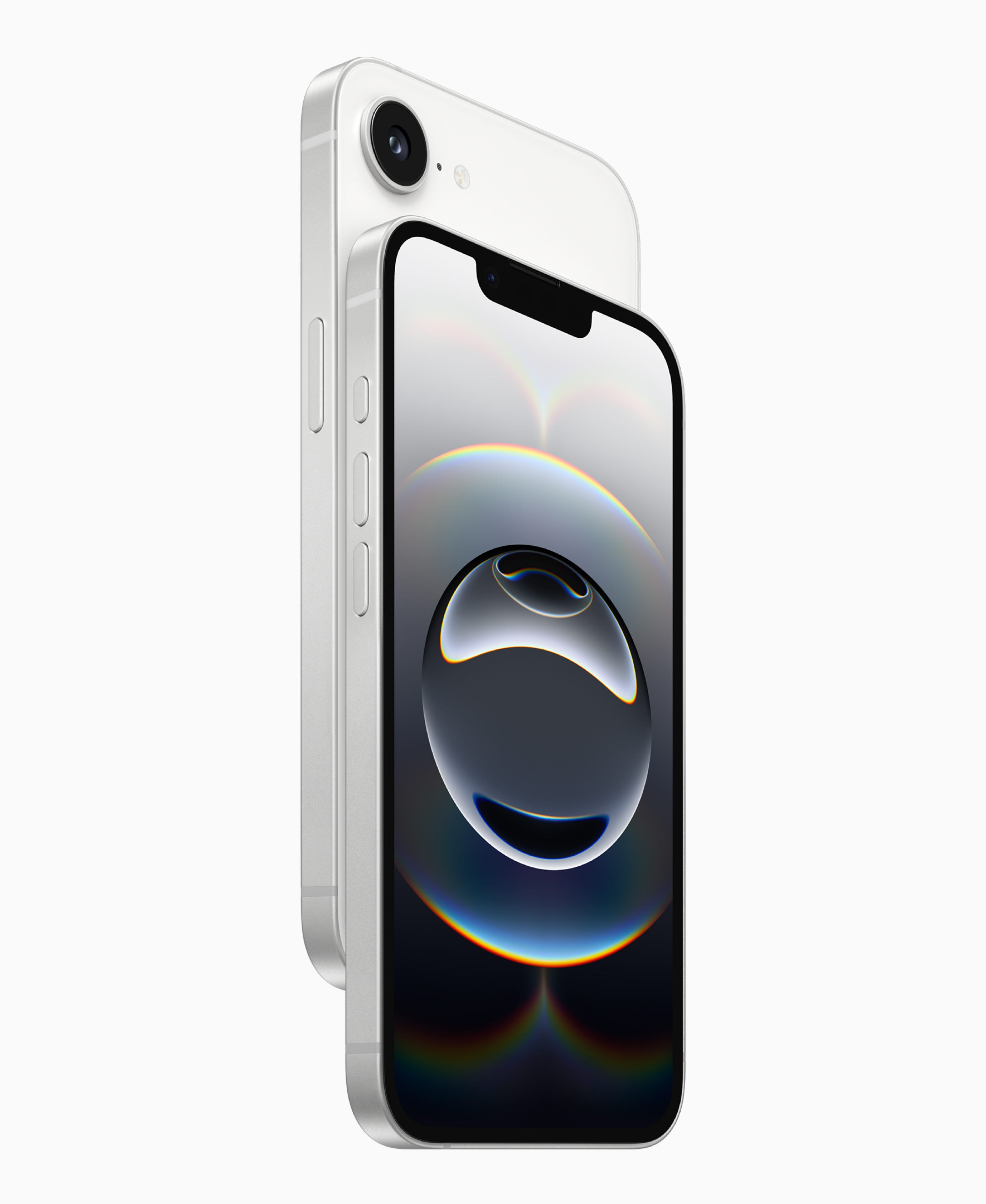
iPhone 16e specs: front, back and inside
📱 On the front, the iPhone 16e has a 6.1-inch all-screen OLED, so the display is larger and has a lot less bezel than the 4.7-inch LCD on the iPhone SE 3. This means that Apple is sunsetting the classic Touch ID home button in favor of a Face ID camera and advanced biometrics. If you’ve seen an iPhone 16, the screen size and display type are the same, though the 16e sticks with a notch instead of the Dynamic Island.
📸 On the back, there’s a single camera lens, but it offers 2-in-1- 48MP Fusiuon main rear camera with an integrated telephoto camera that offers 2x optical quality. There’s also 4K video recording with Dolby Vision up to 60 fps, but with only one camera, you won’t be able to record Spatial Video for Apple Vision Pro. That’s good enough for people who hardly use an ultra-wide. The glass back comes in two colors: black and white. Apple is leaving it up to iPhone 16e cases to liven up the colors.
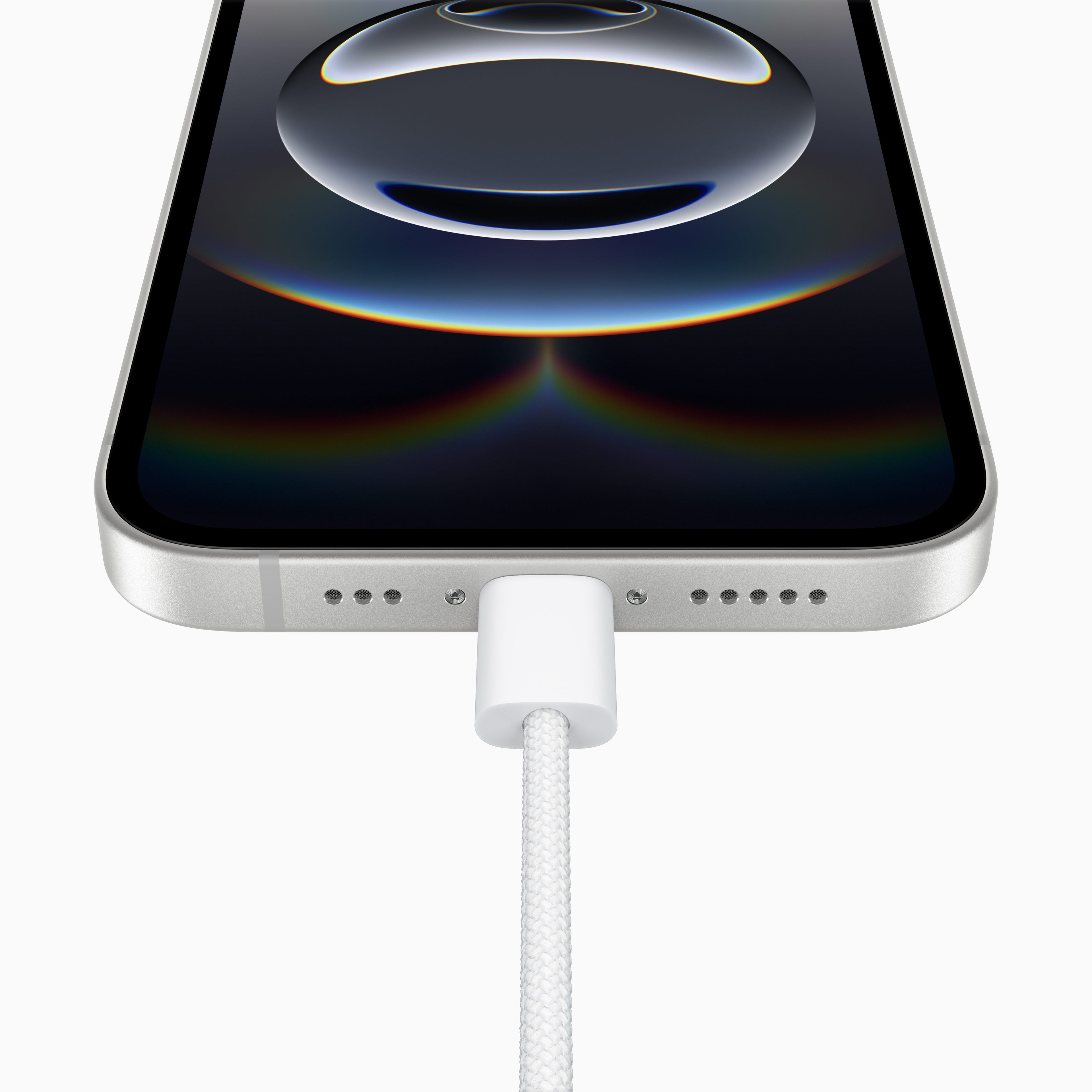
🔘 On the sides, the frame is made of aluminum (only the iPhone 16 Pro and iPhone 15 Pro series carry titanium), with the new-ish Action Button replacing the mute switch for customizable shortcuts and Visual Intelligence. You won’t find Camera Control on the iPhone 16e, however. Along the bottom, USB-C officially replaces the Lightning port.
⚙️ On the inside, the heart of the iPhone 16e is Apple’s A18 chipset. That’s the same chip as the iPhone 16 series, except with a slightly smaller 4-core GPU, still ready for console-quality gaming. It also debuts Apple C1, the first cellular modem designed by Apple without Qualcomm or Intel. Apple says its C1 modem is 25% more efficient, helping lead to longer battery life. There’s also 128B of storage, dumping the 64GB capacity entirely. It’s likely to have 8GB of RAM (although Apple’s official specs don’t say) because that’s the minimum required to support Apple Intelligence, and Apple’s AI is a key feature. Wireless charging is here, although MagSafe is sorely missing.
iPhone 16e rivals
Apple hasn’t updated the iPhone SE series in three years, and it has a few rivals that have been trying to take its affordable phone crown with their own, more frequent annual upgrades. Google, Samsung, and OnePlus tried to fill in the gap.
At the top of my list is Google’s $499 phone, as seen in my Google Pixel 8a review. This phone is going after the same “AI at an affordable price” audience as Apple and has neat face-swapping features in “Best Take.” But you may want to hold off – I expect a Goole Pixel 9a to launch next month.
The Samsung Galaxy A35G at $399 is $200 cheaper than the iPhone 16e with an all-screen display, Circle To Search and three rear cameras instead of one (like Apple) or two (like Google). It doesn’t have all the AI bells and whistles of the Samsung Galaxy S25 series, though.
As seen in our OnePlus 13R review, this $599 phone is actually $499 with an any-device, any-condition $100 recycling reward. It tops all of its rivals when it comes to specs: a 6.78-inch screen, 256GB of storage, 12GB of RAM, three cameras, a 6,000mAh battery, and Qualcomm’s last-gen-but-still-mighty Snapdragon 8 Gen 3 chip (instead of the top-tier Snapdragon 8 Elite, like on the OnePlus 13).
None of these rivals get you out of “green bubble jail,” however.
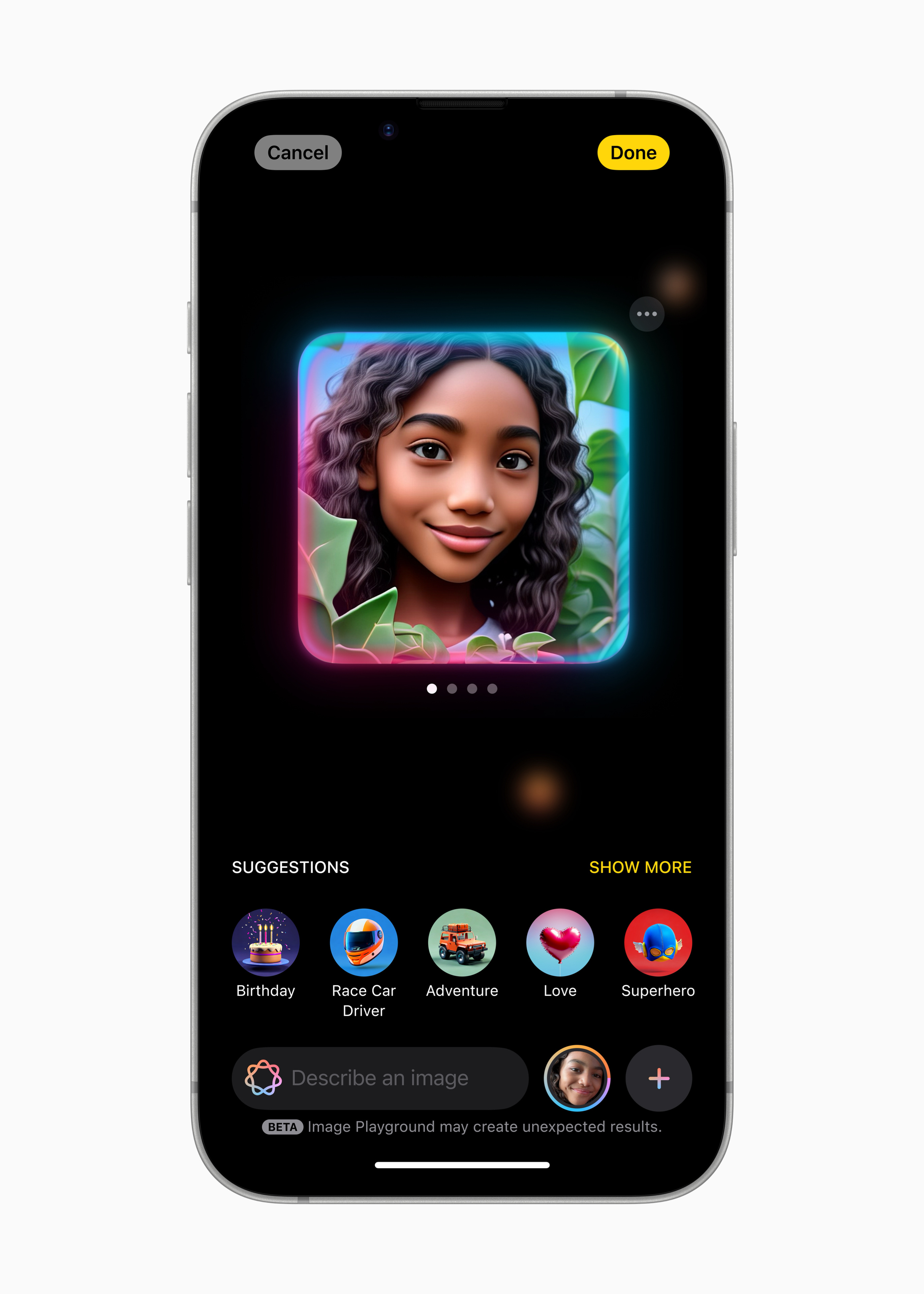
Who is the iPhone 16e for?
After a three-year hiatus, the iPhone 16e is the dramatic all-screen upgrade that says hello to USB-C and goodbye to the home button. I’m a fan of buying the SE or “E” model for my parents, who don’t need the flashy perks of the iPhone 16 Pro but want a new phone while staying in Apple’s ecosystem for iMessage, FaceTime and Find My.
Since the average iPhone 16e user will hold on to their phone longer than most early adopters, it’s important that the guts of Apple’s affordable phone remain top-notch. Apple seems to have done that by introducing the A18 chip and Apple Intelligence to even more consumers. The iPad Mini at $499 is the cheapest way to get Apple Intelligence on a device, but the iPhone SE 16e is the cheapest among iPhones.
Even if it’s $100 more than every iPhone SE 4 rumor and lacks MagSafe, the iPhone 16e with a 6.1-inch screen is a win for phone upgraders who don’t want to spend more than $600 on a new iPhone.