


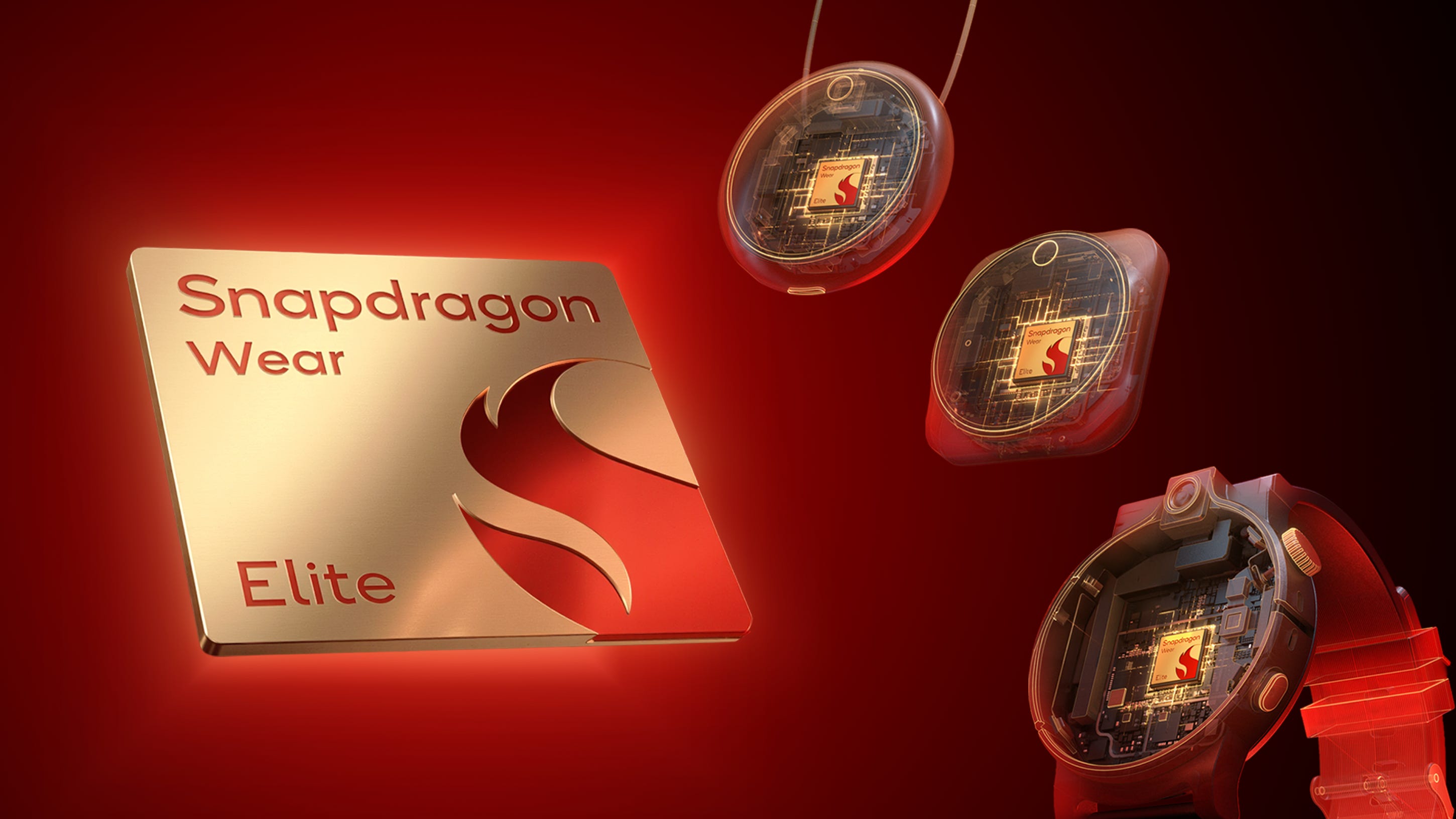

⌚ Qualcomm’s first new wearable platform tier in 3 years debuted at MWC 2026
🧠 First-ever NPU in a wearable chip, running AI models up to 2B parameters on-device
🔋 30% longer battery life and 50% charge in just 10 minutes
📡 Industry-first hexa-connectivity: 5G, Wi-Fi, Bluetooth 6.0, UWB, GNSS, and satellite
📱 Samsung, Google, and Motorola confirmed as launch partners
📆 First devices expected within the next few months
Qualcomm just dropped the biggest wearable chip announcement in years at MWC 2026 in Barcelona, and it’s going to change what you expect from the smartwatch on your wrist. The new Snapdragon Wear Elite is the company’s most ambitious wearable platform yet – and it’s not just for watches anymore.
I sat through a pre-briefing with Qualcomm ahead of MWC, and the key takeaway is this: Snapdragon Wear Elite is designed to turn wearables from smartphone accessories into standalone AI-powered devices. Think watches, yes, but also AI pins, pendants, smart bands, and hub devices that can think for themselves.
Here are 6 things you need to know about the Snapdragon Wear Elite.
🧠 1. It has an actual NPU – a first for wearables
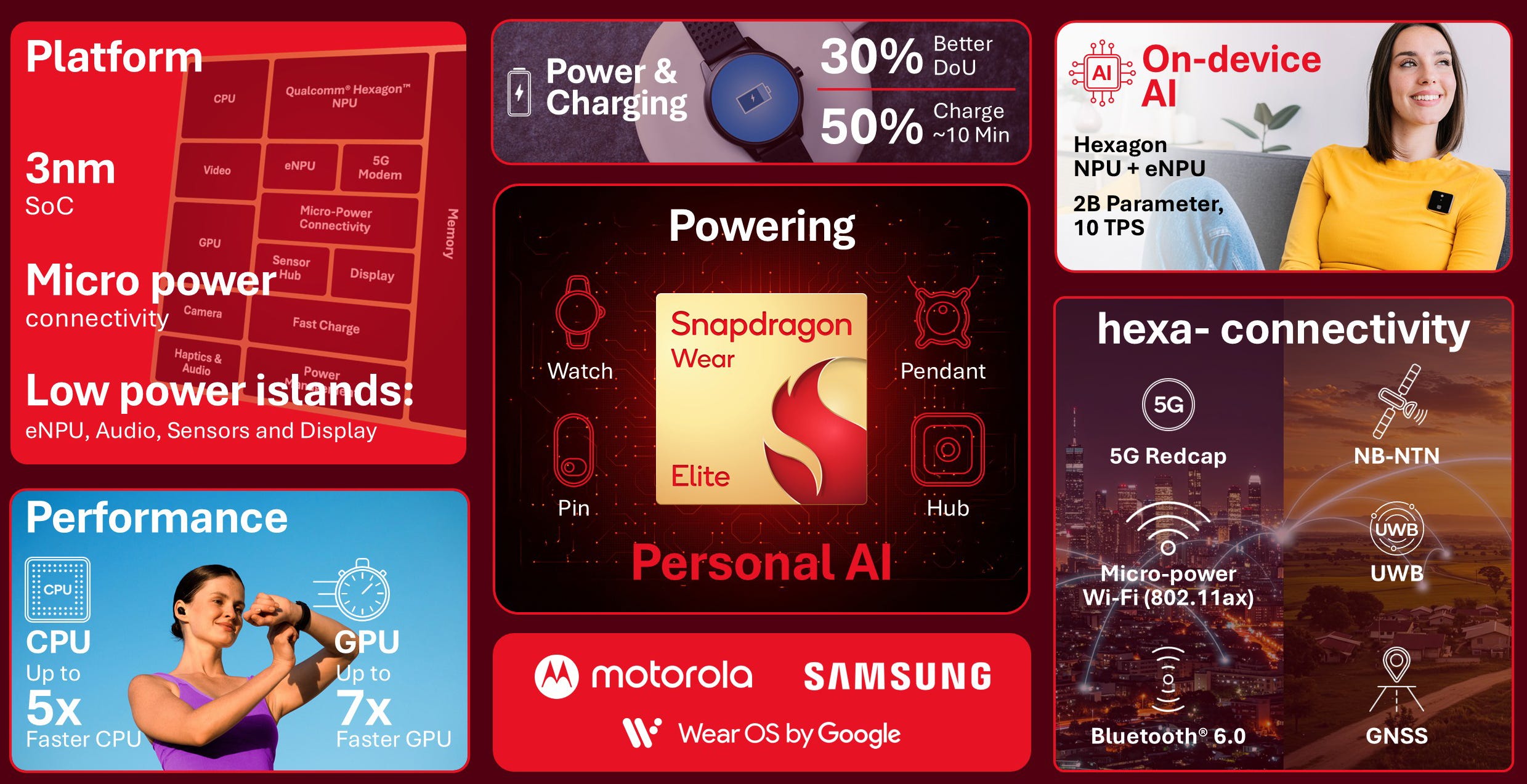
This is the headline feature that separates the Wear Elite from every wearable chip that’s come before it. Qualcomm has put a dedicated Hexagon NPU (neural processing unit) inside a wearable platform for the first time, alongside a secondary eNPU for always-on low-power AI tasks.
What does that mean for you? Your next smartwatch will be able to run AI models with up to 2 billion parameters directly on the device – no phone connection or cloud processing needed. Qualcomm claims a time-to-first-token of just 0.20 seconds and up to 10 tokens per second. In other words, it’s fast enough for real-time voice interactions and smart replies right from your wrist.
The on-device AI enables things like life logging with recall, personalized health coaching, text summarization, real-time transcription and translation, and what Qualcomm calls a “digital proxy” AI assistant that can handle tasks on your behalf. And because everything is processed locally, your personal data stays on your device rather than being shipped to the cloud.
⚡ 2. Performance jump is massive
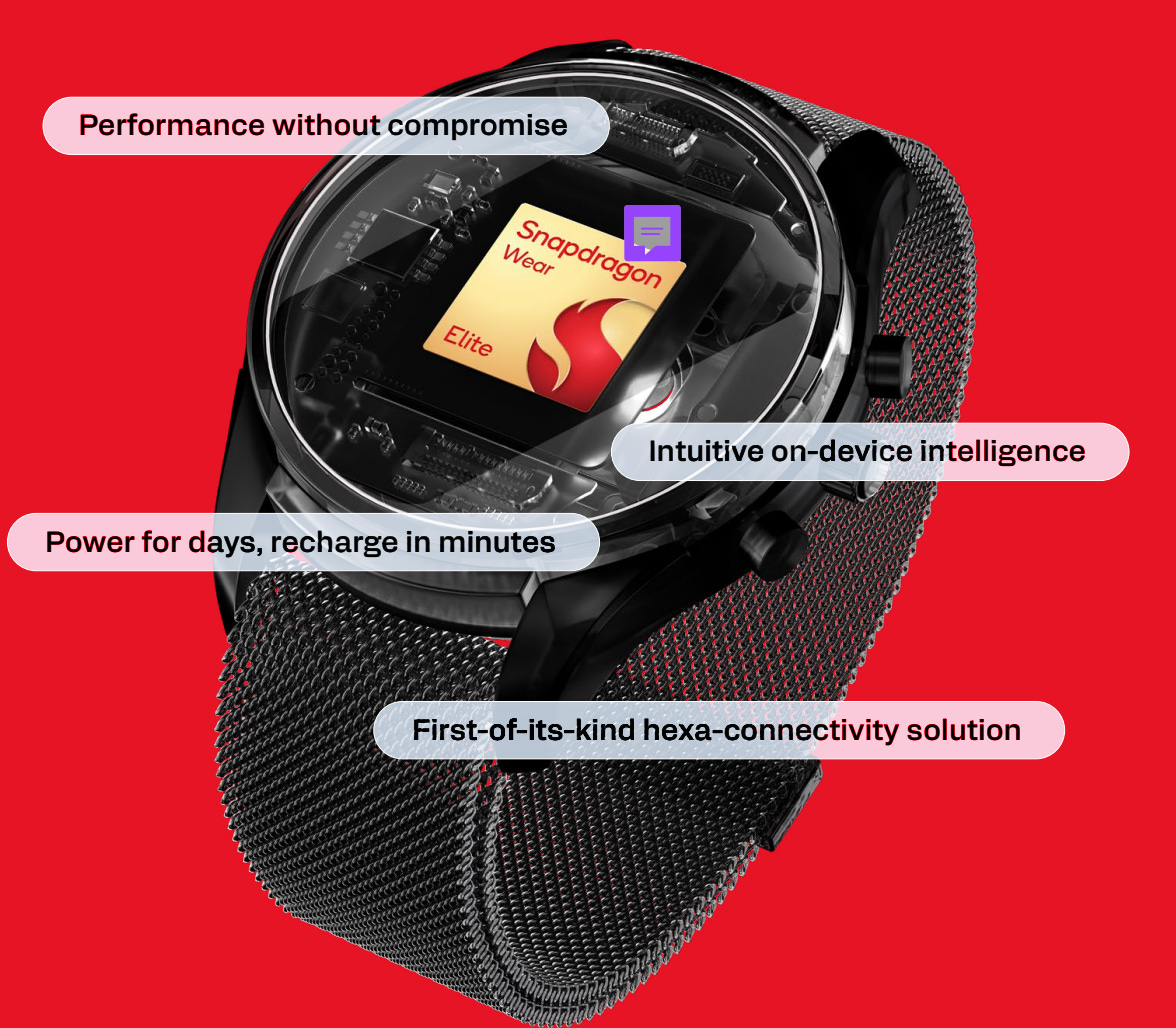
Qualcomm isn’t messing around with the performance claims here. Compared to the Snapdragon W5+ Gen 2 (which currently powers many Wear OS watches), the Wear Elite delivers up to 5x faster single-thread CPU performance and up to 7x improved GPU performance. The CPU features a 2.1GHz prime core alongside four 1.95GHz efficiency cores, and the GPU (Adreno A622) can push 1080p at 60fps – something that was simply not possible on previous wearable chips.
In practical terms, that means faster app launches, smoother scrolling, snappier multitasking, and the kind of always-on display performance that doesn’t make you feel like you’re waiting for your watch to catch up. The 3nm process node is a huge contributor to both the performance gains and the power efficiency improvements.
More from MWC: Moto Razr Fold hands-on (it has a Snapdragon 8 Elite Gen 5 in it)
🔋 3. Multi-day battery life with rapid charging
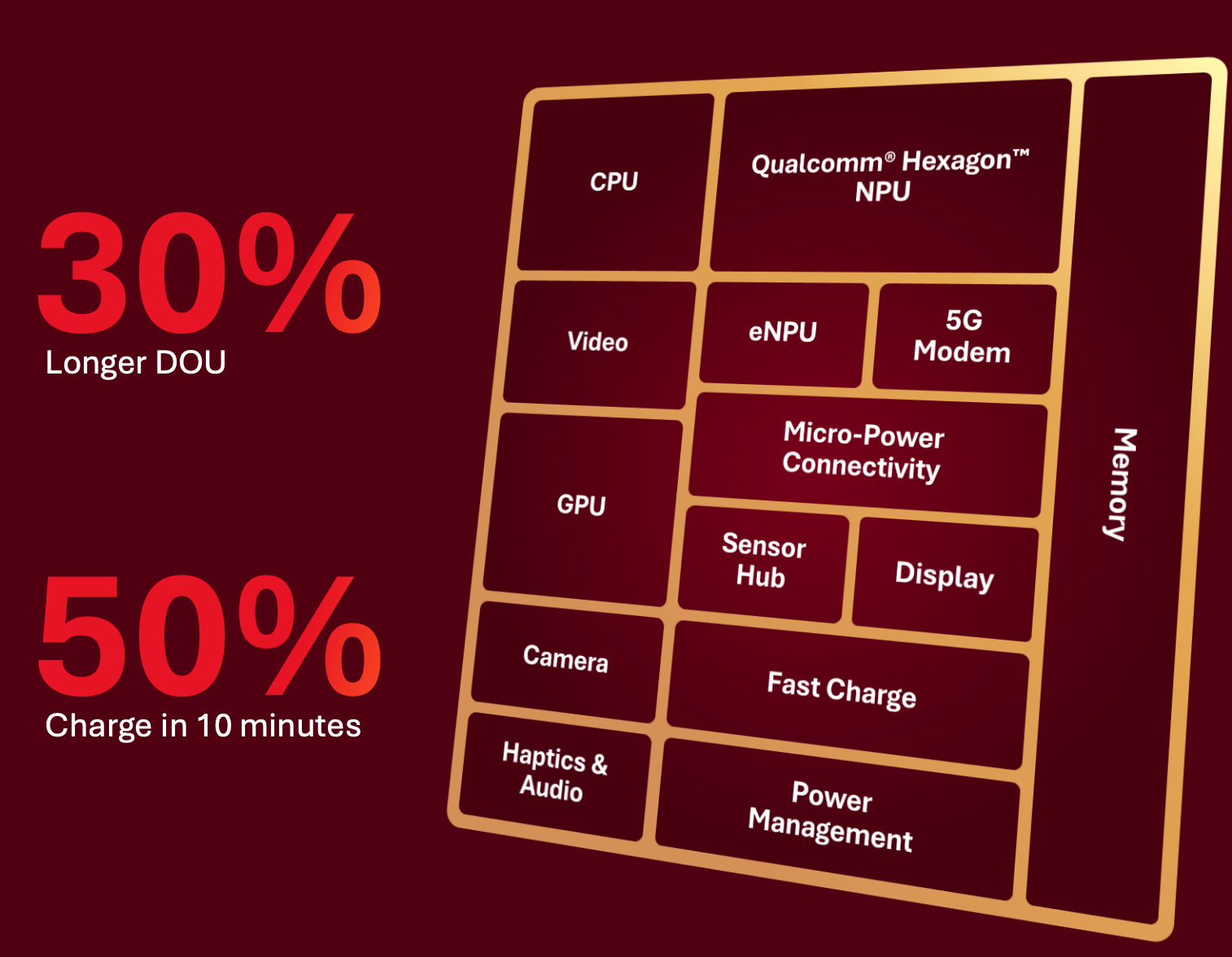
Battery anxiety is real with smartwatches (I’m living it every day here at MWC in Barcelona), and Qualcomm is directly addressing it. The Wear Elite delivers 30% longer day-of-use compared to the previous generation, thanks to a combination of the 3nm process, low-power islands for the eNPU, audio, sensors, and display, plus intelligent power management throughout.
Perhaps more impressive: when you do need to charge, you can go from 0% to 50% in roughly 10 minutes. That’s a morning-shower charge that gets you through the rest of the day. Qualcomm told me it designed the chip with “power for days, recharge in minutes” as a core principle, and the specs back it up.
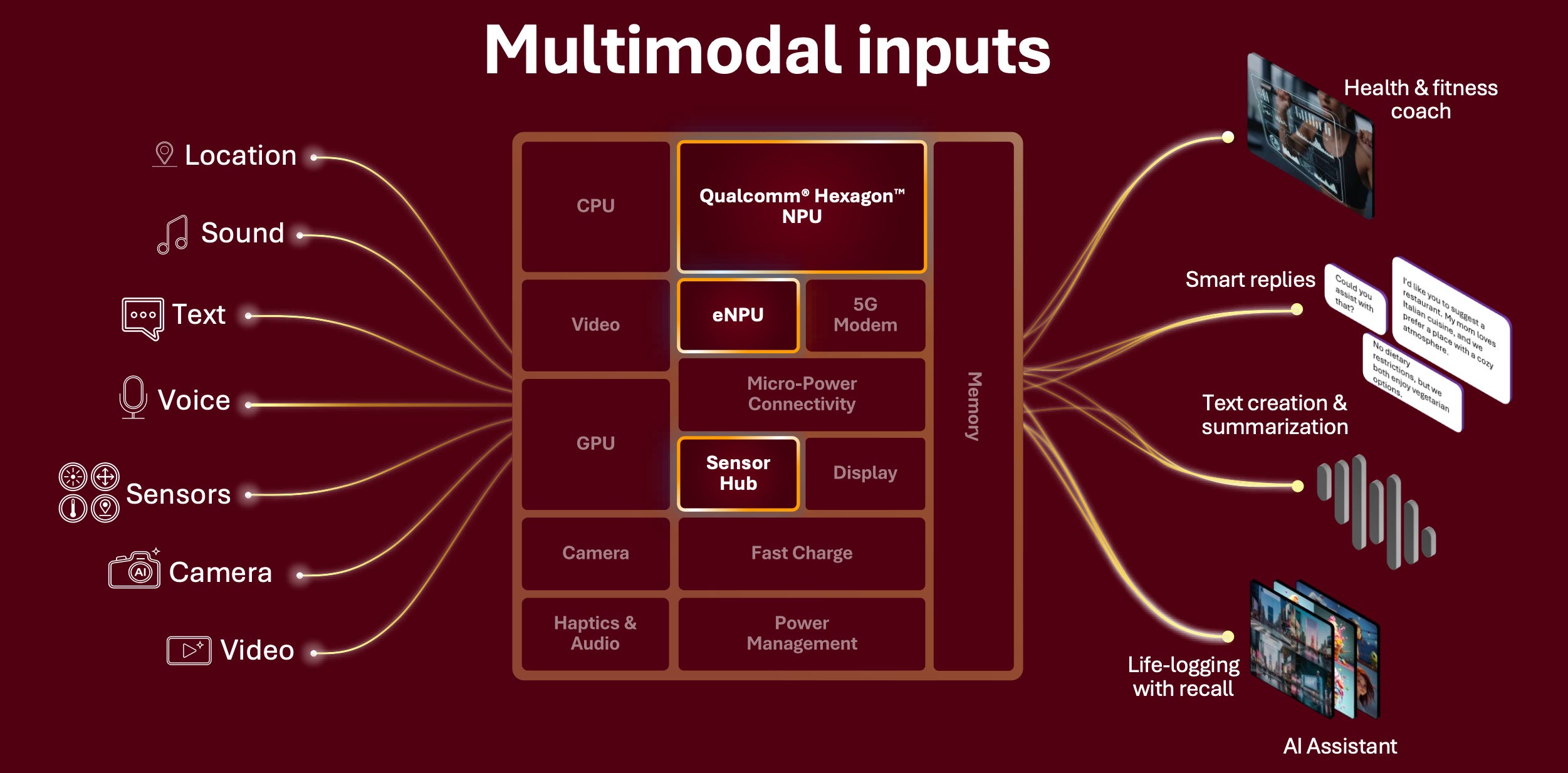
📡 4. Six types of connectivity in one chip
This is where things get wild. The Snapdragon Wear Elite is the first wearable platform to integrate six connectivity technologies simultaneously, which Qualcomm is calling “hexa-connectivity.” Here’s what’s packed in:
5G RedCap gives your wearable its own cellular connection without the power drain of a full 5G modem. Micro-power Wi-Fi (802.11ax / Wi-Fi 6) keeps you connected to local networks and cloud AI services with minimal battery impact. Bluetooth 6.0 enables more precise device finding and seamless pairing across your ecosystem. UWB (ultra-wideband) handles secure proximity interactions like digital car keys and smart home access. GNSS provides precise location tracking across multiple satellite constellations. And NB-NTN – narrowband non-terrestrial network – means your watch can send and receive satellite messages when you’re off-grid, in partnership with Skylo.
That satellite messaging capability alone is a potential game-changer for hikers, travelers, and anyone who ventures beyond cell coverage. It’s the kind of safety feature that could justify upgrading your watch.
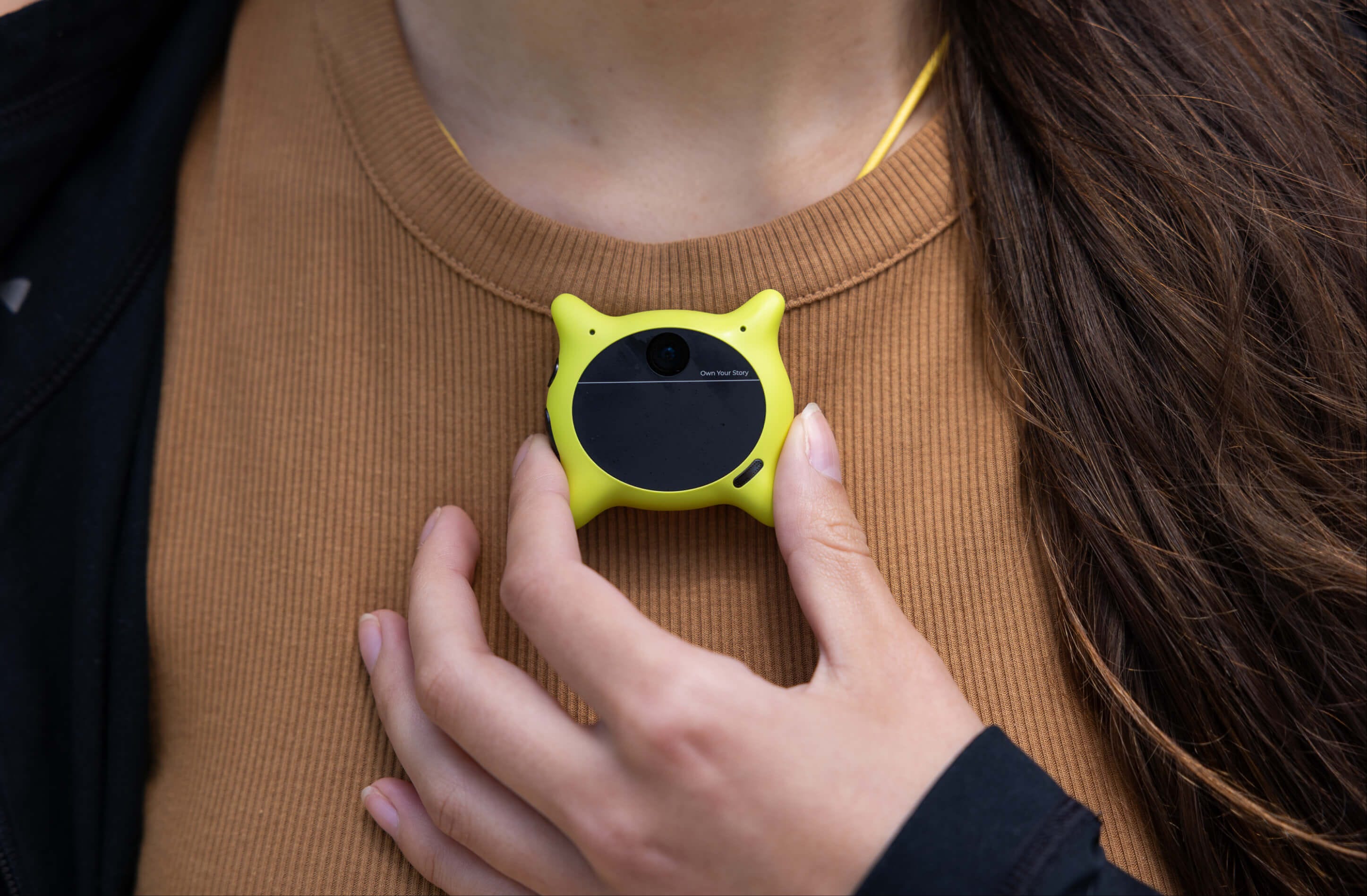
⌚ 5. It’s not just for watches – and Samsung is already on board
Qualcomm made it clear during my briefing that “the Wear Elite isn’t replacing the existing Snapdragon W5 lineup,” with Head of Cloud and Edge AI Product Management John Kehrli describing this additional premium tier “like having two swim lanes.” The W5 Gen 1 and Gen 2 will continue serving the mainstream market, while the Wear Elite targets next-gen premium devices.
And those next-gen devices will go well beyond traditional smartwatches. The platform is designed for AI pins, pendants, smart bands, and hub devices. It supports Wear OS by Google, Android, and Linux, giving OEMs flexibility to build whatever form factor they want.
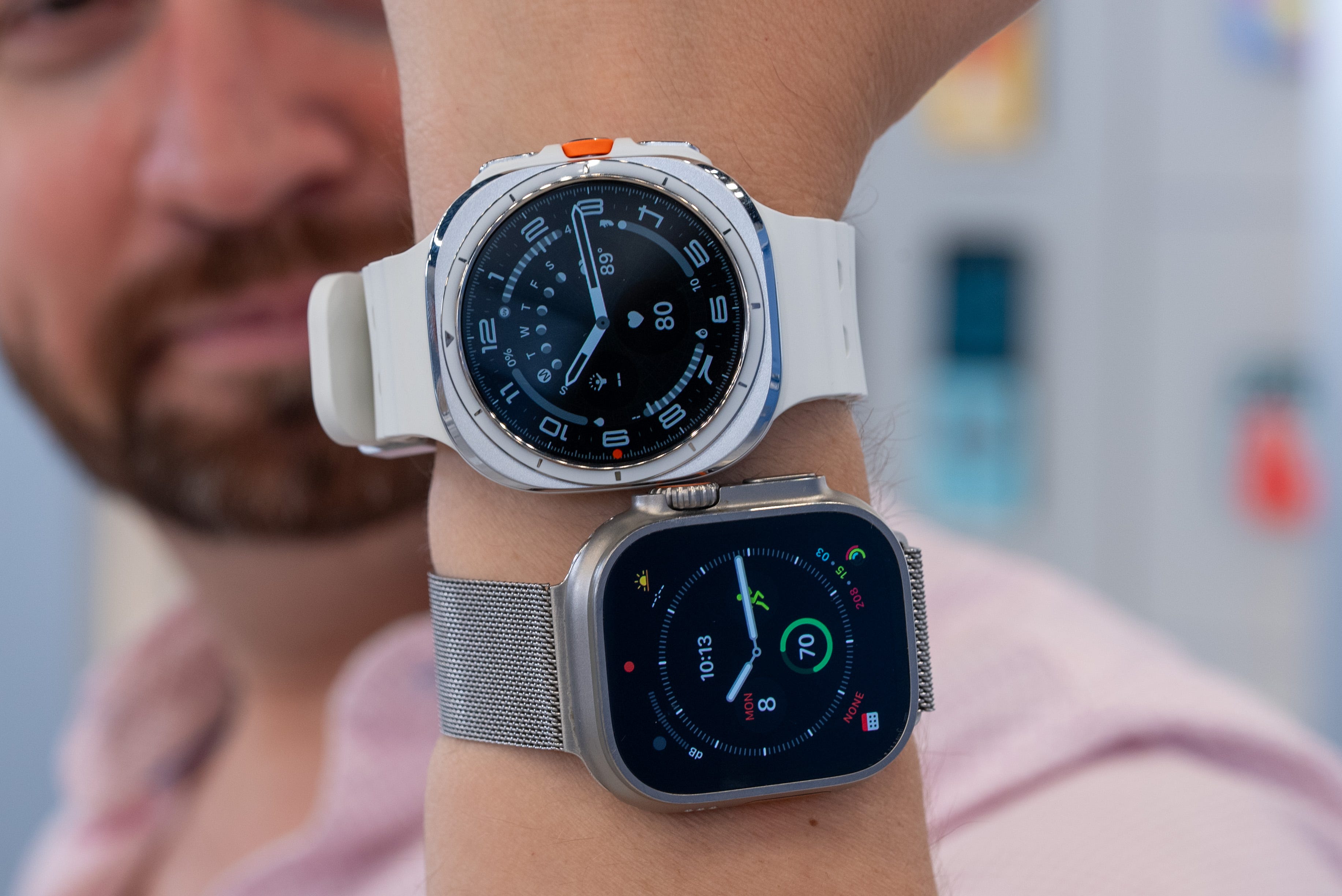
The partner list is strong out of the gate. Samsung confirmed that the next-generation Galaxy Watch will use Snapdragon Wear Elite, calling it “an even more holistic wellness companion.” Google’s Wear OS chief said the platform delivers “the performance, battery life and connectivity essential for the next generation of Wear OS.” And Motorola teased that Wear Elite will help them push forward with their “Project Maxwell” AI companion concept from CES.
One caveat worth noting: while the chip does include camera integration (with Qualcomm Spectra ISP supporting dual CSI 4-lane cameras), the imaging capabilities are geared more toward general wearable use cases than high-end smart glasses. So I don’t expect this to power the next Meta Ray-Bans, which need top-tier camera sensors. For AI glasses, Qualcomm has separate AR1 and AR1+ platforms in its portfolio.
More from MWC: Legion Go Fold Concept hands-on review – the first foldable gaming handheld
📆 6. First devices are coming soon
Qualcomm says the first commercial devices powered by Snapdragon Wear Elite are expected within the next few months. Given Samsung’s explicit confirmation, a next-gen Galaxy Watch seems like a safe bet for one of the earliest arrivals.
Snapdragon Wear Elite key specs
Process: 3nm
CPU: Up to 2.1 GHz (1+4 core config)
GPU: Adreno A622, 1080p@60fps
AI: Hexagon NPU + eNPU, up to 2B parameters
Memory: LPDDR5, 6,400 MHz, 16-bit
Storage: eMMC 32GB
Cellular: 5G RedCap (Rel-17), LTE TDD/FDD
Wi-Fi: Wi-Fi 6 (802.11ax), 2.4/5/6 GHz
Bluetooth: 5.3 + Bluetooth 6.0
Location: NB-NTN, GPS, GLONASS, Galileo, BeiDou, QZSS
UWB: Yes
Camera: Qualcomm Spectra, dual CSI 4-lane
Security: Qualcomm TEE 5.35
OS Support: Wear OS, Android, Linux, Free RTOS
Partners: Samsung, Google, Motorola
Snapdragon Wear Elite outlook
The Snapdragon Wear Elite represents a genuine inflection point for wearable technology. For years, smartwatch chips have been an afterthought – repurposed mobile silicon squeezed into a smaller form factor. Qualcomm is now treating wearables as a first-class AI computing platform, and the specs to back it up are here. The real test will be how Samsung, Google, and Motorola translate this silicon into devices you’ll actually want to wear every day.
We’ll have more hands-on coverage from the Qualcomm booth at MWC 2026 in Barcelona this week.
Matt Swider is the Editor-in-Chief of The Shortcut, the #1 consumer tech publication on Substack. Matt, a trusted technology expert with over 25 years of journalism experience and the former US Editor-in-Chief of TechRadar, can be found on social media through X (Twitter), Instagram, Facebook, and TikTok.