


🏆 Rating: 3.5/5
✅ Pros
📐 One of the most unique designs on the market
📱 Display is gorgeous and bright
📸 Main camera is surprisingly good
🔋 Solid battery life with fast charging
🤖 Nothing OS is a nice change of pace for Android
5️⃣ Five years of software upgrades should be plenty for most people
🦾 AI features are more practical than you’d think
❌ Cons
🏎️ Performance is good, but not as good as similarly priced phones
💡 The Glyph went from a fun gimmick to just a gimmick
📸 Its two extra rear cameras aren’t as good as the main camera
📶 No mmWave 5G support
The Shortcut review
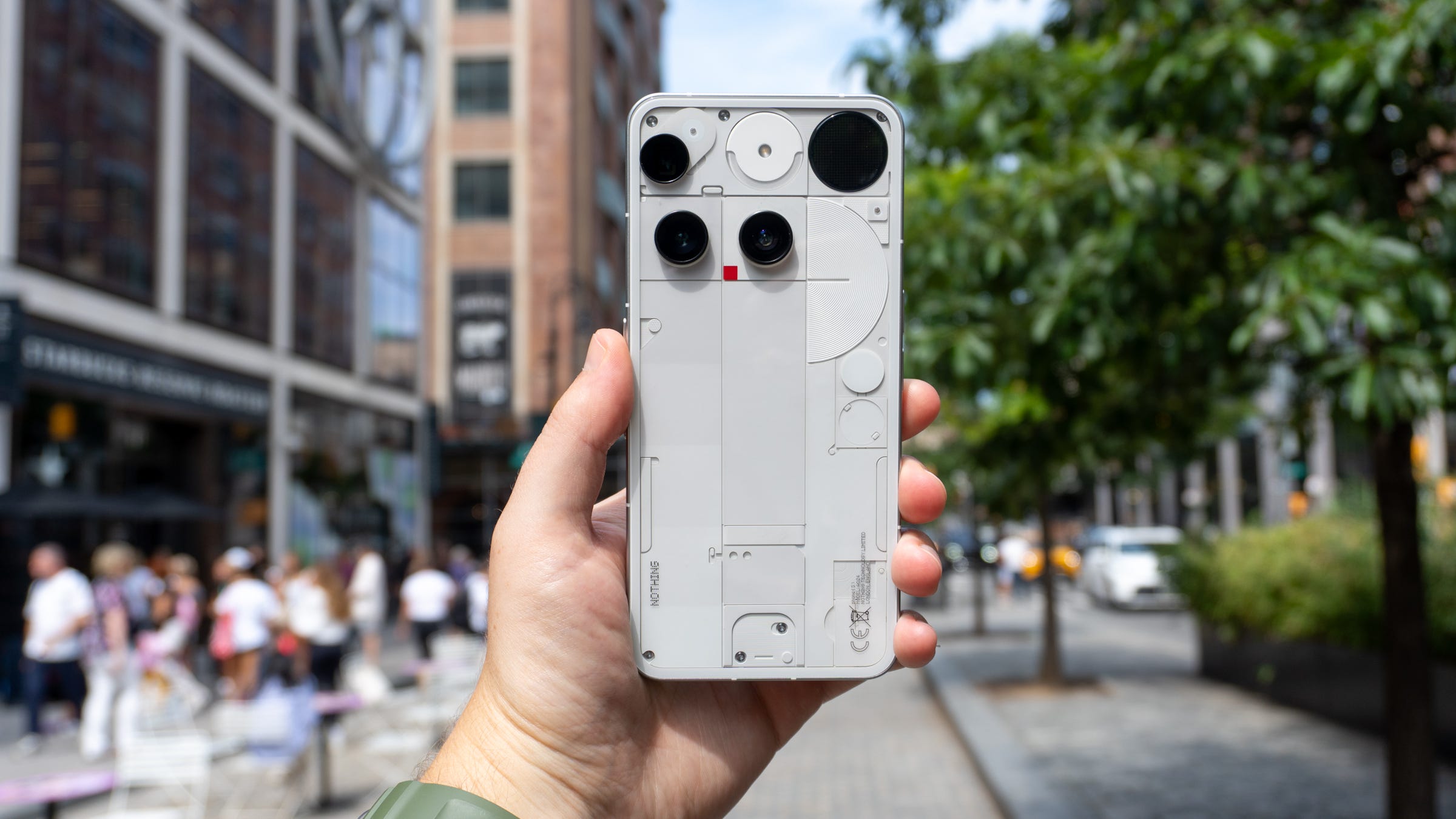
The Nothing Phone 3 is the phone to buy if you think every other phone looks boring. Its design is more jarring than the ultra-thin Galaxy S25 Edge, it has more character than foldables like the Galaxy Z Fold 7 and Motorola Razr Ultra, and it manages to freshen up the design of candy bar-shaped phones even as things become stagnant.
You have to give credit where credit is due: despite the Phone 3 looking funky as all get-out, Nothing has something unique in its $799 smartphone. Plus, it has a gorgeous screen, a great main camera, great battery life, and a pleasant Android experience that’s quickly become one of my favorites compared to Samsung One UI and OnePlus OxygenOS.
While it’s not perfect by any means, there’s something charming about the device, something you won’t find in the design of other phones like the Galaxy S25 and upcoming Pixel 10. Unless you prioritize having the very best specs, the Phone 3 is a good choice if you want to stand out with your next smartphone.
Full review
Design


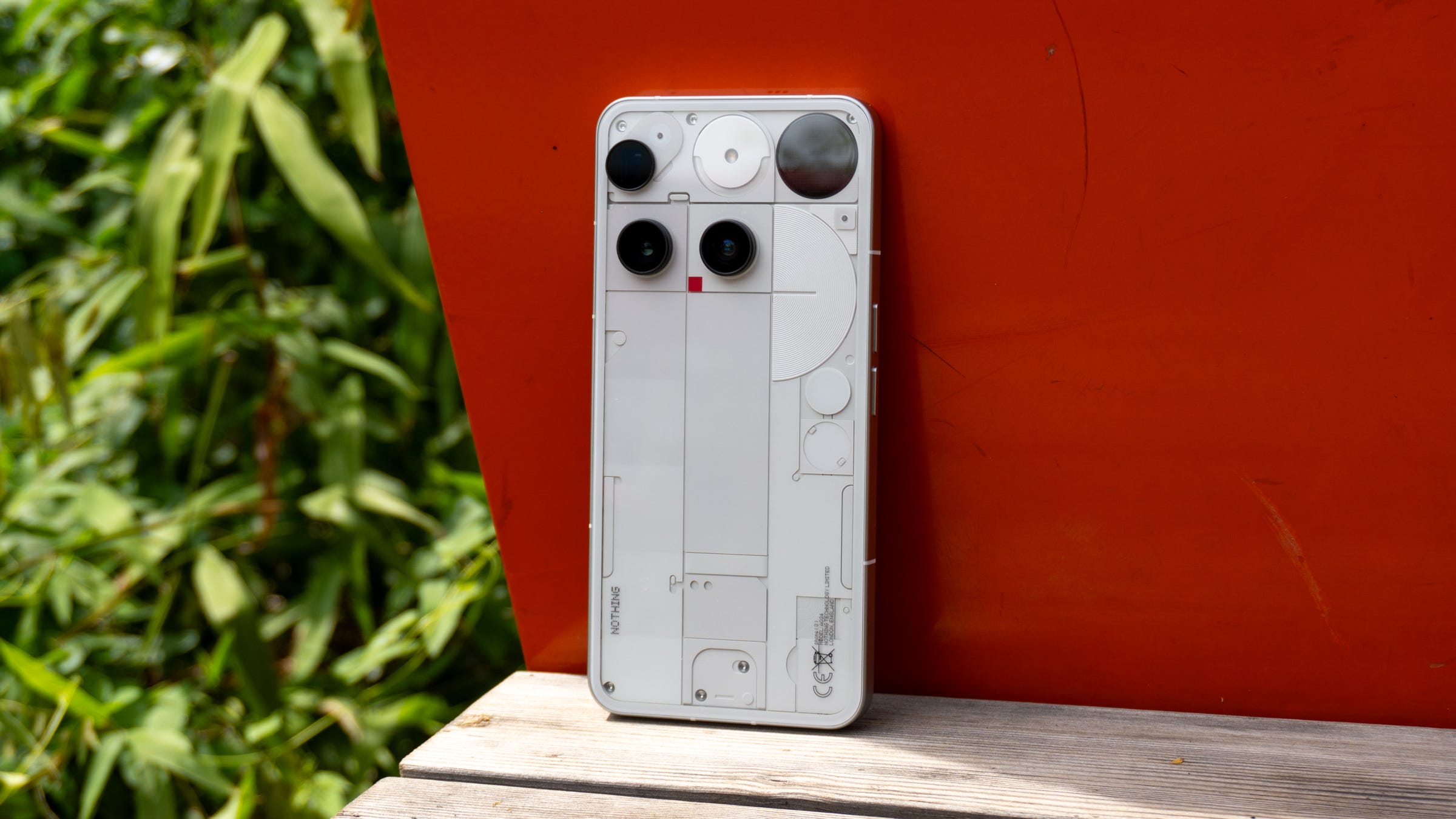
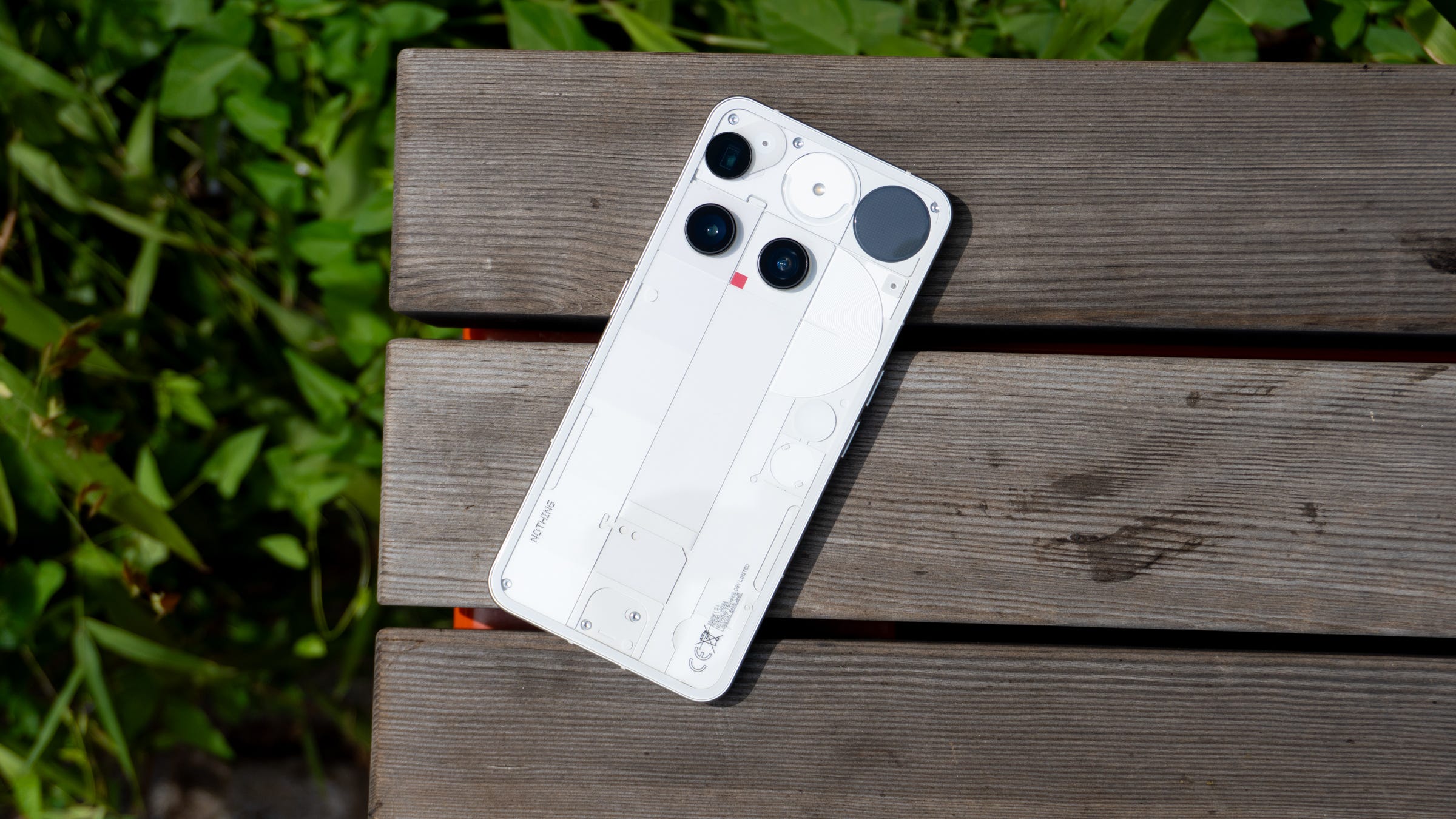
📐 A whole lot of Nothing. The Phone 3 is full of Nothing’s design language through and through. One look at this phone and you can tell it’s not made by any established manufacturer, which helps it stand out in a market full of generic designs. The transparent backplate gives way to a unique pattern that masks most of the internals of the phone, while the awkward layout of the cameras and LED flash add a splash of peculiarity that’s straight-up uncommon. Then there’s the Glyph interface, which has been transformed from a set of LED lights to a dot-matrix screen in the top right (more on that later). It’s a very Nothing smartphone, one that’ll evoke plenty of subjective opinions.
🎨 We need new colors. I was sent the white version of the Nothing Phone 3, which looks very nice in person. I’ve seen the black one as well, which also looks sharp, but we’ve seen these colors on Nothing phones for years. It’s time for Nothing to shake up the color selection of its phones. I know it’s not really its style to offer something other than black/gray or white, but it’d be cool to see alternative finishes like the company’s Community Editions enter a larger market. Maybe the Phone 4 will usher in something even more unique.
⚖️ Heftier than you’d think. Beyond the intricate design, the one thing you’ll notice right away when picking up the Phone 3 is the heft. This puppy is 9mm thick and 218 grams, which is thicker and heavier than a lot of phones I’ve tested this year. The Galaxy S25 Ultra, for example, weighs the same but is 8.2mm thick. Meanwhile, the OnePlus 13 trims things down to 8.5mm and 210 grams. By comparison, it’s one of the chunkiest phones of 2025.
💦 Water, dirt, and drop protection. The Phone 3 has the same IP68 rating as many Android flagships on the market, which means it’ll be fine against dirt and dips into the pool. You’ll find first-generation Gorilla Glass Victus on the back and Gorilla Glass 7i on the front, which will give you good protection against drops and scratches. However, the glass isn’t as strong as what you’ll find on the Galaxy S25 and Pixel 9 series, so if you’re susceptible to dropping your phone, you may want to shop elsewhere (or use the case that comes in the box).
Display & Glyph interface
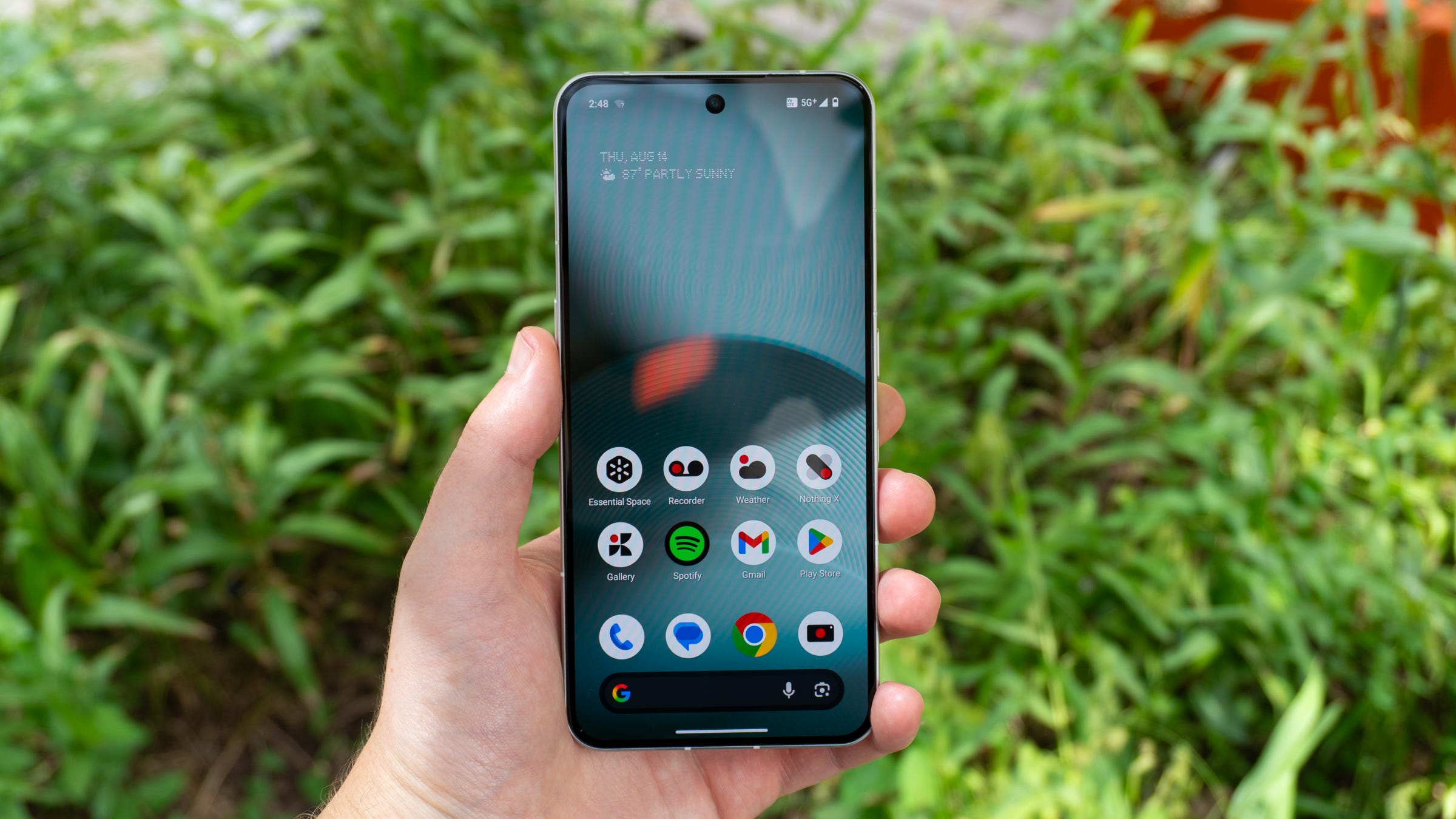
📺 Delightfully stunning. I was pleased to see that the Nothing Phone 3 has a beautiful screen. At 6.67 inches, there’s plenty of room to enjoy content and multitask, while not bombarding you with a tablet-like experience like some other phones can. The Full HD+ resolution is sharp, the OLED panel is colorful and contrasty, and the 120Hz refresh rate keeps everything responsive. It reminds me a lot of using any other Galaxy or Pixel phone, which works in Nothing’s favor. It’s also not oversaturated, which makes it feel closer to using my iPhone than other displays I’ve tested.
☀️ Super high brightness. Perhaps the best part of the screen is the brightness. It can reach as high as 4,500 nits when playing HDR10+ content, giving the panel enough headroom so you can see it in direct sunlight without issue. It’s far brighter than the Galaxy S25 Ultra and is on par with what you get from the OnePlus 13.


🫥 Glyph gets digital. If you’ve ever seen a phone from Nothing before, you’ve probably seen the LED lights on the back. Nothing calls this the Glyph interface, but on the Phone 3, it’s been transformed into a dot-matrix screen. It lives in the top right on the back of the phone and is triggered by a “hidden” white button. It’ll show you things like the time and weather, as well as a number of Easter eggs called “Toys” that are basically pre-built mini-games. You can also assign light patterns for different notifications, callers, and more.
🪀 More gimmicky than ever. While some of the notification features can be helpful if you tend to put your phone face-down on tables, the rest of the new Glyph experience is gimmicky as all get-out. Between spin the bottle, the magic 8 ball, and the weird ability to see yourself in the Glyph (also known as the strangest camera viewfinder of all time), many of its core features don’t add any functionality. They can be a lot of fun, mind you, but no more fun than downloading an app that can already do those things. Is it a perk for buying the Phone 3? Not really, but it certainly makes the phone stand out.
Camera


📸 All about that main. The best camera on the Nothing Phone 3 is the 50MP main camera. While Nothing isn’t necessarily known for the best camera quality, the company promised to step up its game this year, and it did so with the main shooter. Photos are vibrant and full of life, with sharp colors and contrast. Depending on the lighting, pictures can come out slightly overexposed, but most photos are nice. I also tried my hand at some low-light shots while enjoying a delicious burger, and the camera managed to pull in enough light to keep my food appetizing. Detail tends to dip once you get into really low-light situations, but overall, you’ll be pleased with this camera. It’s about on par with what I can get from the Galaxy S25 and S25+.
🏞️ A middling ultra-wide and telephoto. The other two 50MP rear cameras aren’t as good as the main, but can still kick out a good shot or two. The ultra-wide isn’t quite as wide as other cameras I’ve used at 114 degrees, and it’s harder for it to focus at times, which forces you to stay put to get a sharp shot. At night, the camera struggles to keep colors accurate and avoid washing everything out, while detail softens more than on other phones. The telephoto camera has 3x optical zoom, and during the day, photos look almost identical to the main camera. But once you step inside or into any lighting beyond sunlight, it can get tricky to get a great-looking picture, and I strongly recommend avoiding the camera at all costs at night.
🤳 Pretty good selfies. The 50MP selfie camera is actually quite good. I took a handful of selfies with the phone during my review process, and they all came out with balanced lighting and skin tones. Colors can get a bit washed out at night, but other than that, I enjoy taking selfies with the Phone 3.
📹 Video needs some work. The biggest downside to the Nothing Phone 3 camera system is video quality. You can record in 4K at 60 frames per second, and there are some granular controls for locking in the shot you want. But the results often look over-processed and over-exposed, regardless of the lighting you’re in. It’s a few steps behind the Galaxy S25 and Pixel 9, and it’s still not close to what you can get from the iPhone 16 Pro. Compared to previous Nothing phones I’ve tested, I can see some improvement in color, but that’s about it.
😎 Vibe check. For the most part, these cameras are good. The main camera will be your best friend whenever you’re taking photos, while the rest are complementary focal points that are best used in broad daylight. I don’t think these cameras are bad, but there’s still room for improvement, despite Nothing making the longest strides with these sensors that it ever has with one of its phones.
Performance
🏎️ A step behind, but not bad at all. The Phone 3 is powered by a different kind of Qualcomm processor: the Snapdragon 8s Gen 4. It’s a less powerful chip compared to the flagship Snapdragon 8 Elite that most other Android phones have, but it’s still capable of delivering solid performance. I didn’t run into any performance issues with this phone, and everything from multitasking to interacting with Gemini felt smooth and responsive. As long as I can’t notice a huge dip in performance compared to the best phones out there, I generally don’t care what chip companies use. The Phone 3 is a prime example of this.
💾 The right amount of storage and RAM. The chip is backed up by 12GB or 16GB of RAM, depending on whether you choose the 256GB or 512GB storage tier. Both are plenty for multitasking to your heart’s content, and they’ll allow you to store everything you need on your phone. Unless you’re someone who needs a full-blown terabyte of storage on your phone, these configurations will suffice.
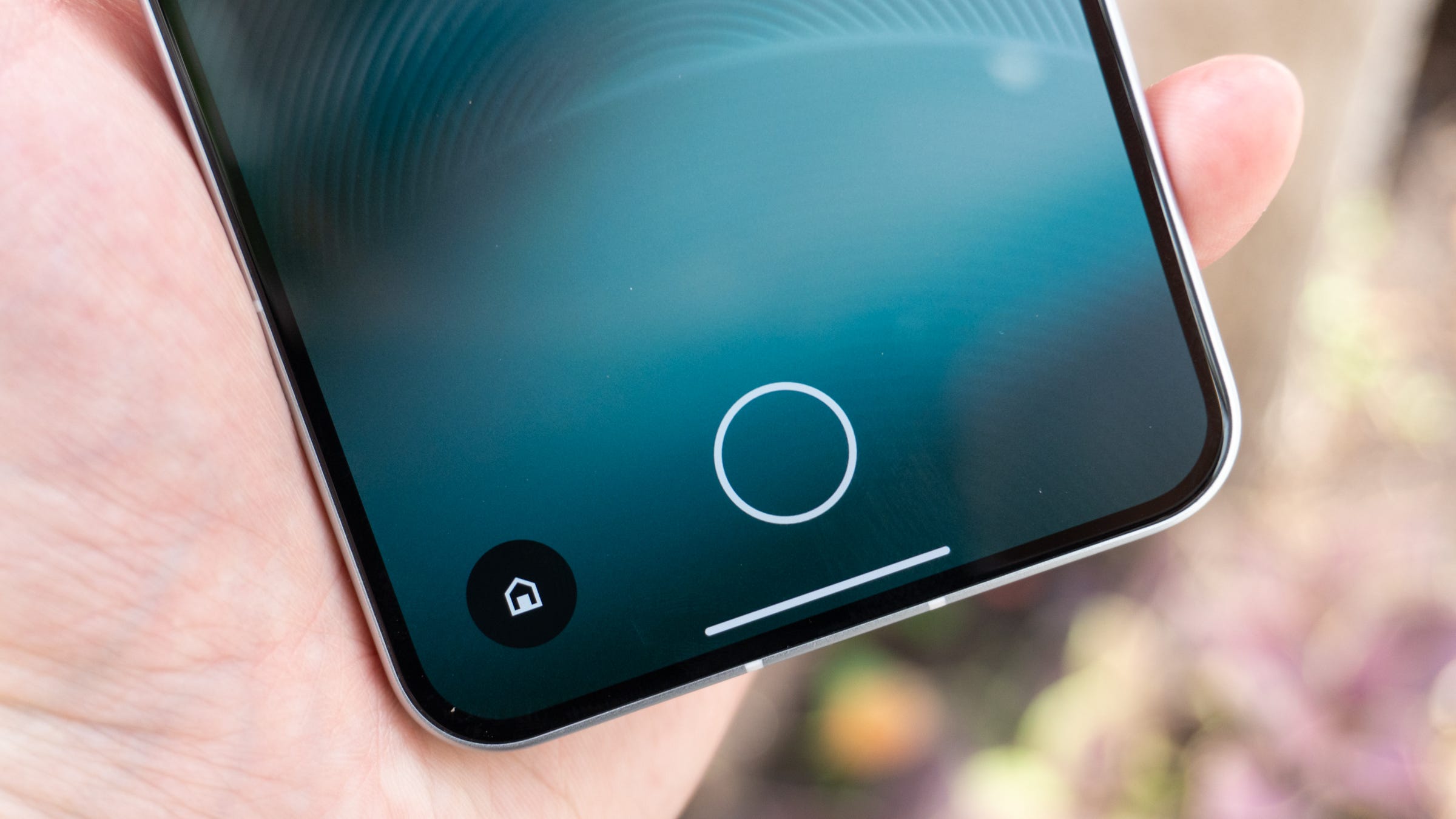
Fast fingerprints. The in-display fingerprint scanner works well. It’s not quite as reliable as some readers I’ve tried, but when it works, it’s fast.
🔊 Solid speakers. I like the way the speakers on the Nothing Phone 3 sound. They’re similar to what you get from an iPhone, with decent bass and a ton of volume. They can get distorted at higher volumes, but overall, they’re enjoyable. You can always grab a pair of Nothing Headphone 1 if you need better sound quality.
📳 Underwhelming haptics. I’ve been testing a lot of Android phones with great haptic vibrations, but the Phone 3 isn’t one of them. Vibrations feel hollow and a bit cheap compared to what you’d find on the Pixel 9 Pro and OnePlus 13. They aren’t terrible, but far from the best I’ve tested this year.
🔴 Verizon support is limited. A quirk that some smartphones sold in North America still come with is limited carrier support. The Nothing Phone 3 has all the bands you need if you want to connect it to a plan on T-Mobile or AT&T, but if you’re a Verizon customer, your experience may vary. While it does technically work on the network, it might be tricky to get it activated. You may want to bring it to a Verizon store to get your service set up if you have an account with Big Red.
Software & AI


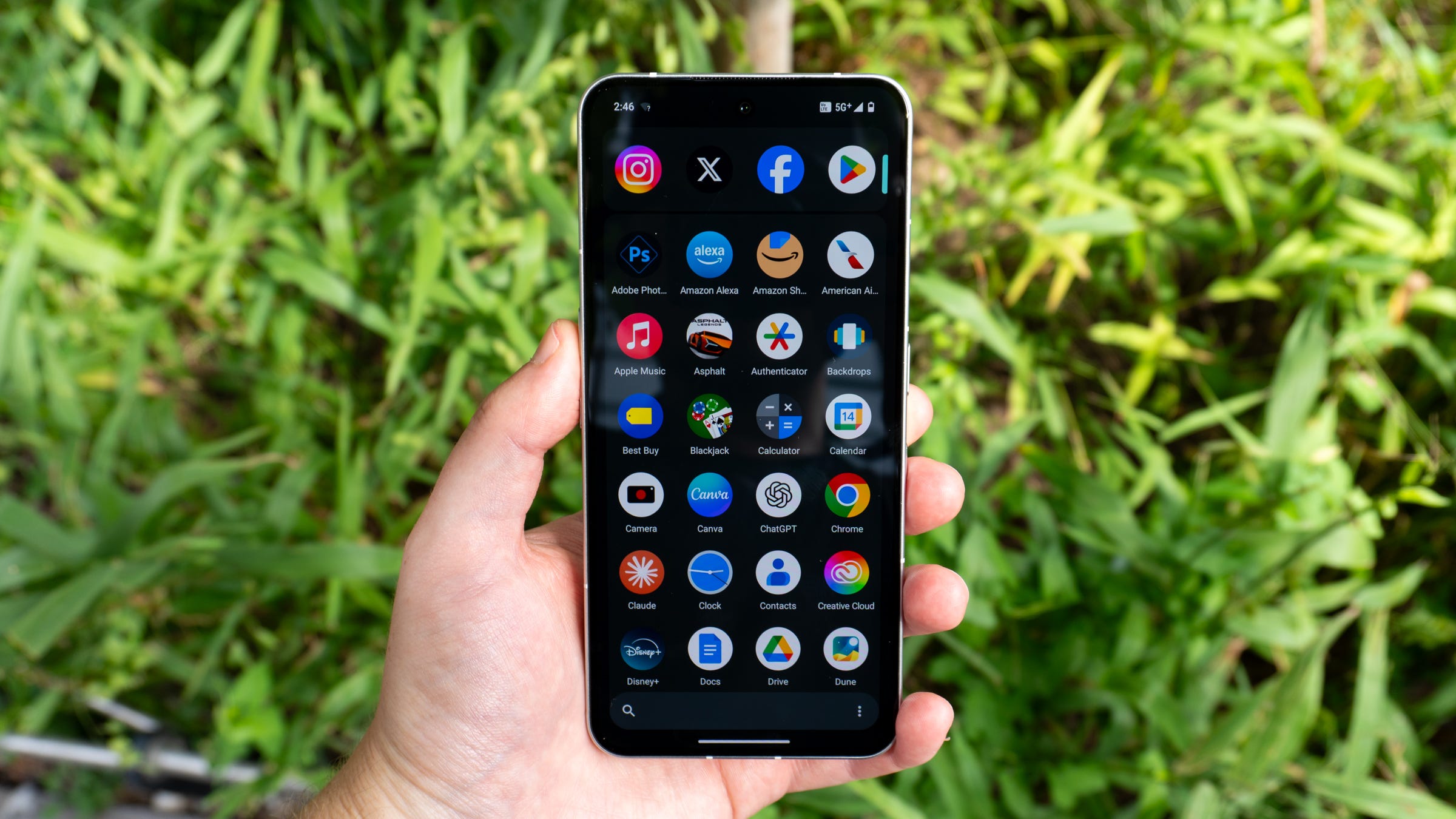
📲 Nothing OS is a delight. Charming software experiences are few and far between in today’s smartphone landscape, yet Nothing is keeping one alive with Nothing OS. Based on Android 15, the software is delightfully clean, which feels more useful and less overwhelming than Samsung’s One UI. Everything from the home screen to the quick settings panel looks welcoming and full of character, all of which is accented by dot-matrix iconography and serif fonts. You also get plenty of customization options to help make it your own.
🤖 Handy AI chops. Nothing makes a solid play for an AI ecosystem. The Phone 3 focuses in on the company’s Essential Space experience (accessible via the glossy side key), which lets you take notes and record things throughout the day so you can remember them and reference them later. There’s also Essential Search, which lives in the app drawer and works as both a regular search bar for your phone and a full-fledged AI chatbot. They live alongside Google Gemini, which enables things like Circle to Search and Gemini Live. After testing all of this, I can confidently say this is a great phone to buy if you want to experiment more with AI. Nothing does a better job than Samsung in not overcrowding its phone with too many AI tools, but highlighting ones that are approachable and practical.
5️⃣ Five years of upgrades is plenty. Many Android phones nowadays offer seven years of software upgrades, but the Phone 3 is only promised five. While that may seem like a disadvantage, chances are you’ll probably upgrade your phone in five years anyway. Unless you need the extra two years of updates, you’ll be just fine with Nothing’s software support policy.
Battery life and charging
🔋 All-day power (and then some). The Nothing Phone 3 is a thick boi for a reason: there’s a huge battery inside. The 5,150mAh cell gives the device all-day battery life with medium to heavy usage, according to my testing. That means if you use your phone a bit less than me (which is highly likely, given the extensive nature of my tests), you could get a full day of usage with some left in the tank for the next day. I wouldn’t go as far as to call it a two-day phone, but it’s certainly capable of lasting a full day no matter how much you use it.
⚡️ Speedy charging. Nothing also included 65W fast charging with the Phone 3, which should be among the top specs that other companies take note of. It’s exhausting seeing companies charge $1,000+ for phones that charge at less than half this speed, yet Nothing is able to do it for $799. Granted, you need to buy a wall adapter to make it work, but support is nonetheless there. It can charge your phone from zero to 100% in under an hour, in my testing, and it takes about 25 minutes to go from zero to 50%. You also get 15W wireless charging, which is nice, as well as reverse wireless charging.
🧲 No Qi2 magnets. The Phone 3 isn’t Qi2 certified, so you can’t use any magnetic accessories with it. Nothing isn’t selling a case with magnets in it, either, so you’ll need to buy a third-party case if you want to attach a magnetic charger or wallet to your device.
Should you buy the Nothing Phone 3?
Yes, if…
✅ You want a smartphone that stands out
✅ You don’t want to spend more than $1,000
✅ You need all-day battery life
✅ You want to experiment with great AI features
✅ You need speedy performance
No, if…
❌ Camera quality is important to you (get the Pixel 9 Pro instead)
❌ You plan to use your phone longer than five years (get the Pixel 9 Pro)
❌ You need the best specs (get the Galaxy S25 Ultra instead)
Max Buondonno is an editor at The Shortcut. He’s been reporting on the latest consumer technology since 2015, with his work featured on CNN Underscored, ZDNET, How-To Geek, XDA, TheStreet, Country Central, and more. Follow him on X @LegendaryScoop and Instagram @LegendaryScoop.