



💻 World’s most modular rugged PC: 6 user-replaceable areas, 5,760+ configurations
⚙️ First rugged PC with an optional 8GB discrete GPU
🔌 First rugged PC with up to 3 Ethernet ports – including a 10Gbps option
🔋 Up to 24 hours of battery life (with optional second battery)
🤖 Intel Core Ultra Series 2 vPro CPU with AI Boost – a first for the rugged category
📶 Wi-Fi 7, optional 5G up to 3.5Gbps, support for T-Mobile and Anterix added
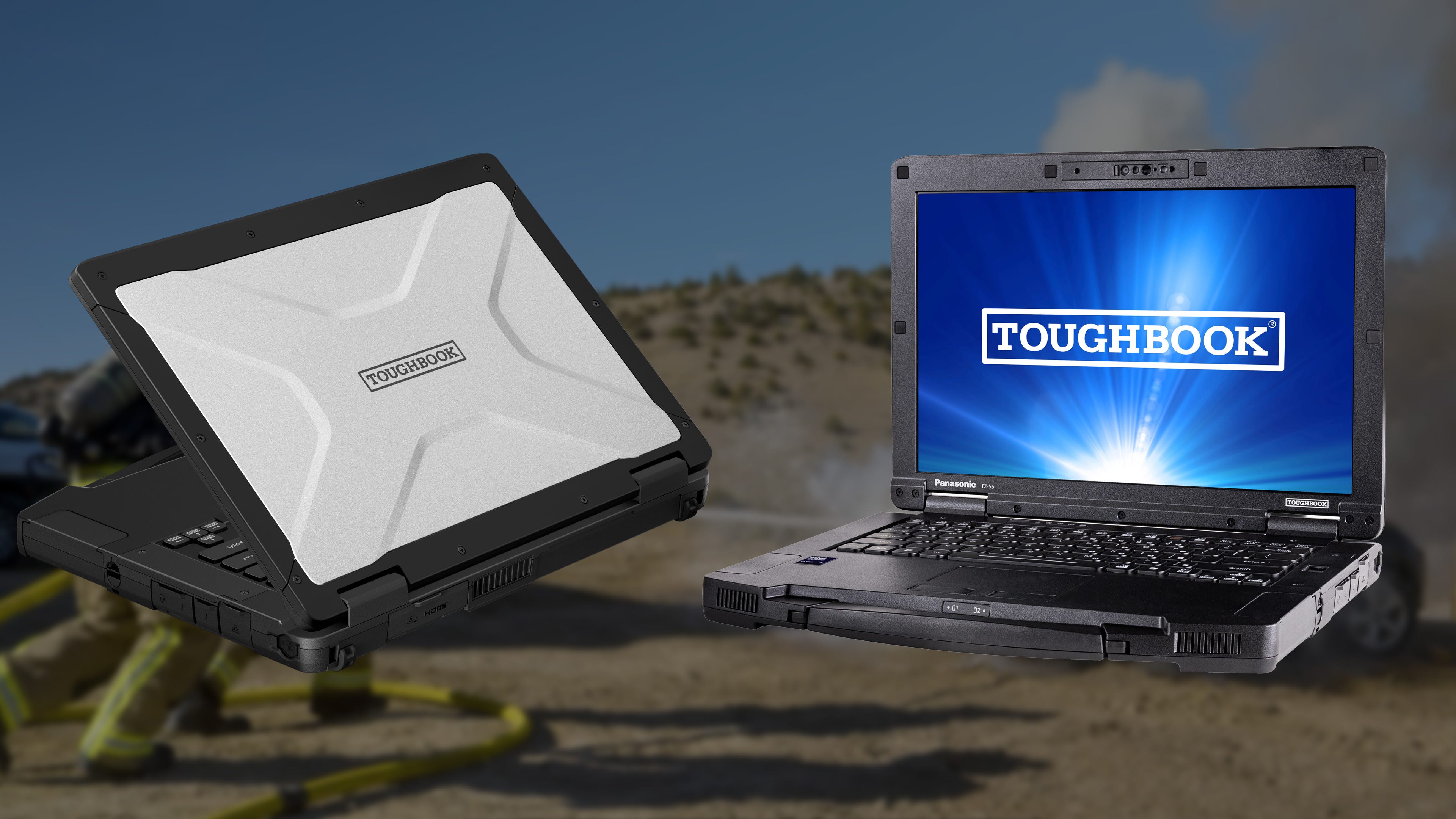
💪 MIL-STD-810H certified, IP53 rated, 3-foot drop rating, magnesium alloy chassis
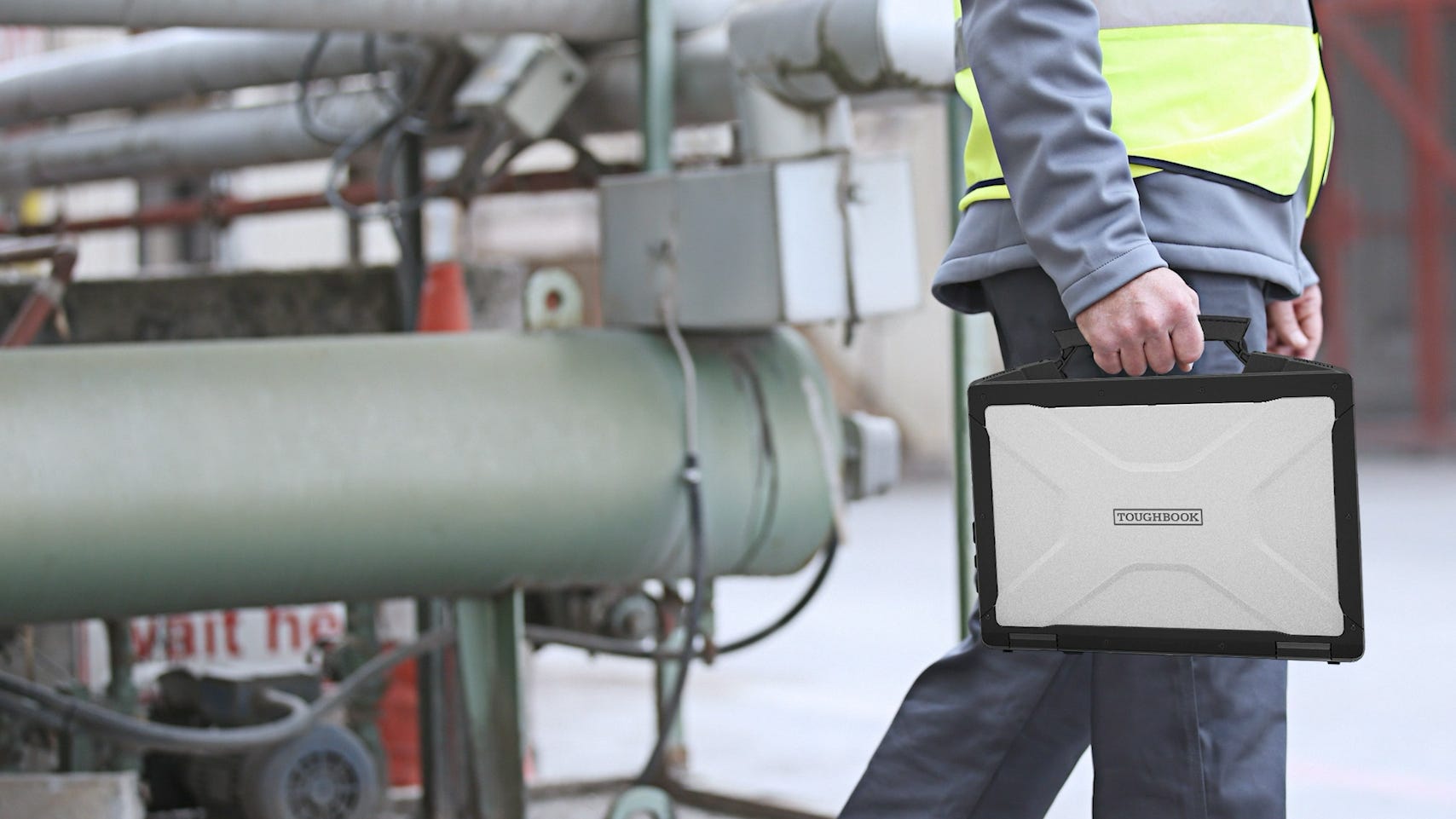
🏋️♂️ Starts at 4.66 lbs; ships with Windows 11 Pro
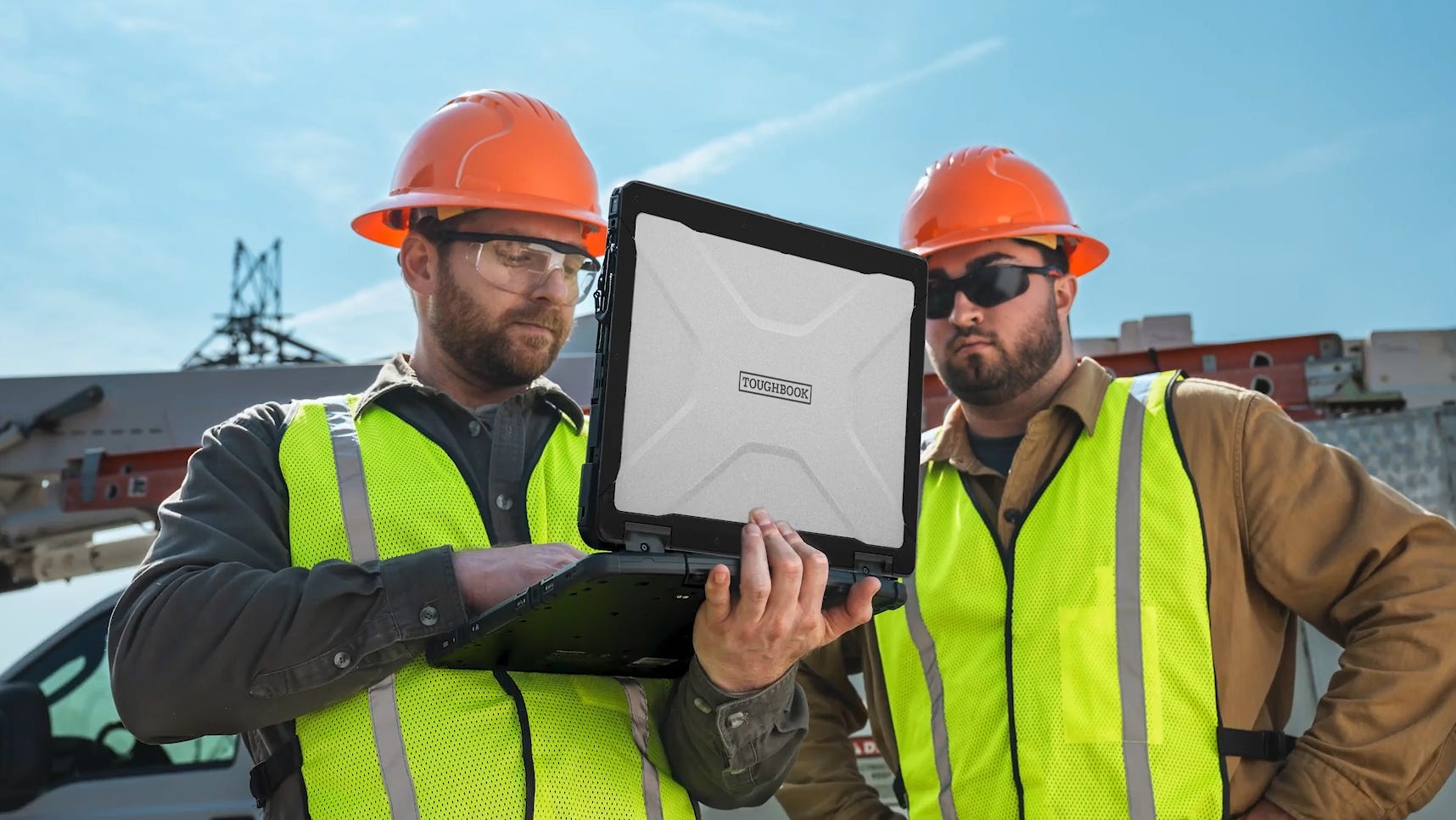
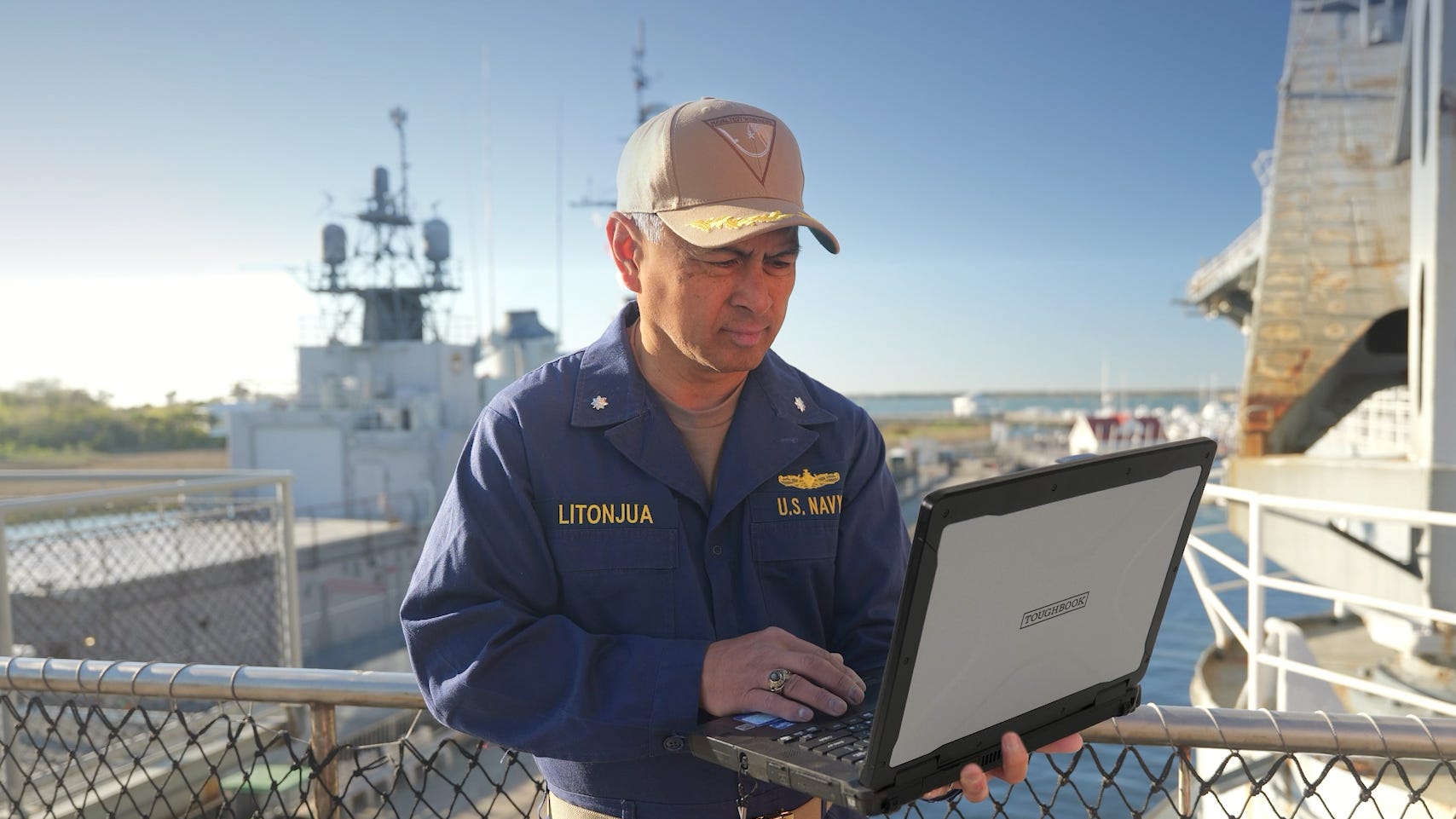
Picture a firefighter pulling up to a scene, laptop lid closed during the drive, needing GPS the moment the truck stops. Or a utility worker swapping out a barcode reader module on a five-year-old device rather than requisitioning a new machine. Or a Navy technician imaging a fleet of laptops over a 10Gbps Ethernet connection that didn’t exist two years ago. These are the people that Panasonic says it builds the ToughBook for – and with the new ToughBook 56, the company has delivered the most capable rugged laptop it has ever made.
And if that sounds like the opposite of everything Apple is doing with the MacBook Air, that’s because it is. Thin and light is a design philosophy. So is indestructible and infinitely configurable. The ToughBook 56 is the fullest expression of the second one.
The ToughBook 56 succeeds the ToughBook 55 – one of Panasonic’s best-selling rugged PCs ever – and arrives with more than 90 upgrades over its predecessor. That number sounds like marketing fluff until you start going through the list.
What even is a rugged laptop?
If you’ve never thought about this category before, you’re probably not a firefighter, a utility worker, or a Navy technician. But rugged laptops are a massive B2B segment, and the ToughBook line has been the dominant player in that space for 30 years. Panasonic’s pitch was simple: a standard laptop dies in the field. A ToughBook does not.
The original ToughBook concept started – and this is a great origin story – when British Petroleum came to Panasonic in the mid-90s and asked for a laptop that could survive an oil field with a CD-ROM drive built in. Panasonic said yes. That decision essentially created an entire product category. Three decades later, the customers are police officers, EMS workers, military personnel, utility crews, and anyone else whose office is outside the four walls of a building.
The ToughBook 56 is designed for all of them.
Modularity is the whole point
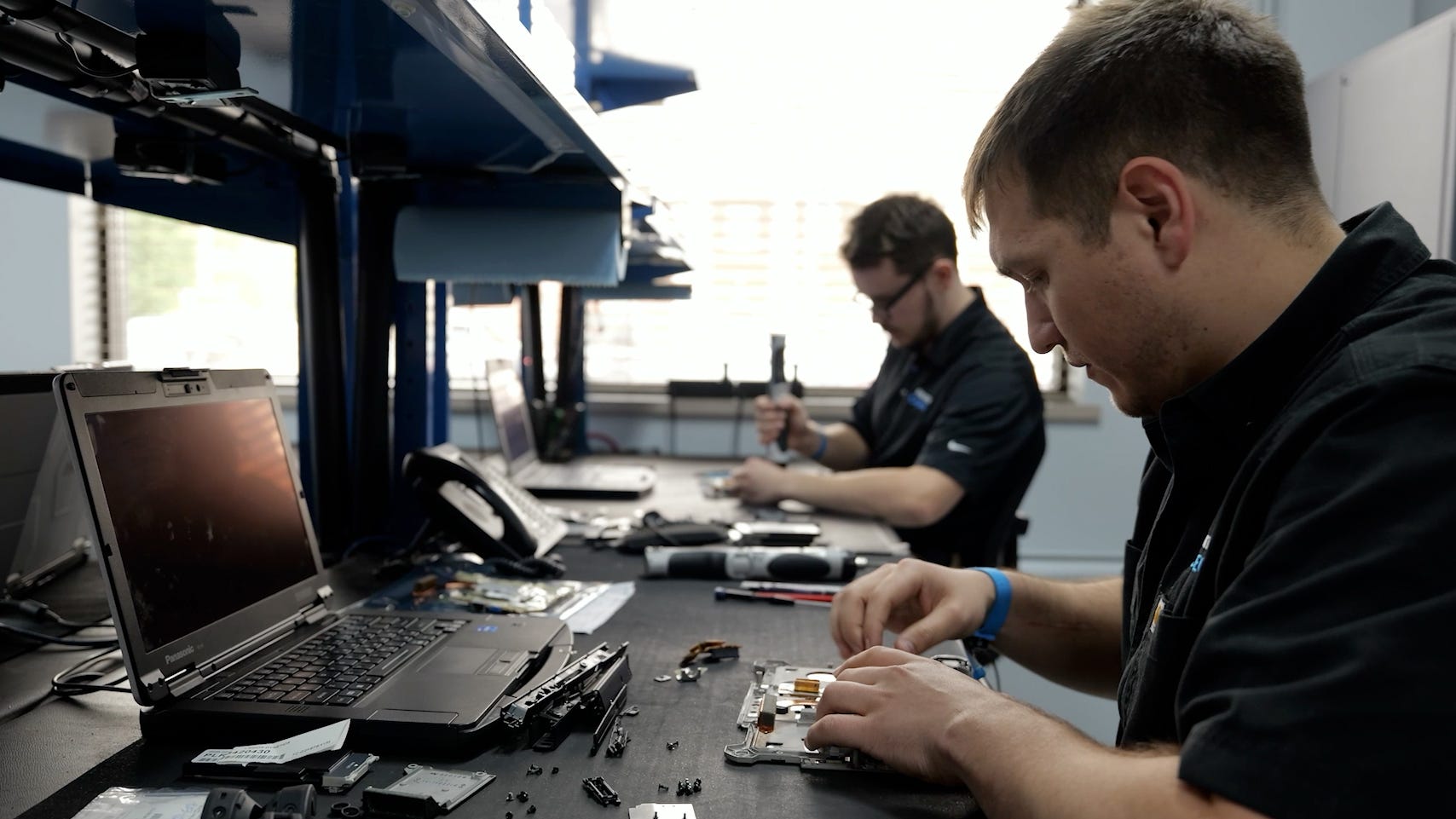
Here’s where the ToughBook 56 starts to feel genuinely innovative rather than just durable. The laptop ships with six user-replaceable modular areas – Panasonic calls the swappable components “xPAKs” – that let buyers configure the device like a set of very serious LEGOs.
Want a barcode reader on the left? Done. A 10Gbps Ethernet port? Also done. A second SSD? A Blu-ray drive? A contactless smart card reader? All of these slot in and out, and crucially, they can be added or swapped years after purchase. Most rugged users keep their devices three to five years – some organizations deploy them for over a decade – so the ability to upgrade a component without replacing the whole machine is a legitimate cost-saving proposition.
Panasonic claims 5,760 possible configurations across those six areas. Do the math yourself if you enjoy that kind of thing, but the point is that the ToughBook 56 can be an almost entirely different device depending on who’s buying it.
New to this generation is a brand new embedded security area – non-removable, but it frees up the other modular slots for additional combinations. This means, for the first time, a customer can have a contactless smart card reader and a second battery simultaneously. That’s a bigger deal than it sounds for agencies that require both.
This is the most connected rugged laptop ever made
The connectivity specs on the ToughBook 56 are where it earns its industry-first credentials. It’s the first rugged PC capable of running up to three Ethernet ports simultaneously – and the optional third port tops out at 10Gbps, which is ten times the speed of a standard gigabit connection. For IT administrators imaging thousands of units, that’s not a marginal improvement; it translates to hours of deployment time saved per cycle.
On the wireless side, the ToughBook 56 ships with Wi-Fi 7 as standard, with all three bands – 2.4GHz, 5GHz, and 6GHz – enabled by default (a change from the previous model, which defaulted to 2.4GHz only and left some users puzzled by sluggish speeds). The optional 5G modem now supports T-Mobile and Anterix’s private cellular network in addition to the existing Verizon, AT&T, and FirstNet support. That last one matters for utilities and defense customers who are increasingly building private cellular infrastructure as a Wi-Fi alternative.
The GPS antenna was also quietly relocated – moved to the left side of the chassis so it sits over a plastic section rather than the magnesium alloy body when the lid is closed. This fixes a real-world problem: first responders who are required to drive with their laptop lid closed were waiting up to two minutes to reacquire GPS signal on the previous model. That’s not a software fix. It’s an engineering decision driven directly by how people actually use these machines in the field.
The performance story is legitimately interesting
The ToughBook 56 is the first device in the rugged category to run Intel’s Core Ultra Series 2 vPro processor with AI Boost – two generations ahead of what’s in the ToughBook 55. Options include the Core Ultra 5 235H (up to 5.0GHz, 14 cores) and the Core Ultra 7 265H (up to 5.3GHz, 16 cores). Both come with DDR5-5600MHz memory, up from slower DDR4 in the previous generation.
The headline spec, though, is the optional AMD Radeon Pro W7500M discrete GPU with 8GB of VRAM – double what competing rugged devices offer. Panasonic is targeting graphics-intensive field applications and AI inferencing workloads with this option. It adds roughly a pound to the weight and a 0.6-inch bump to the base (and notably does not work with vehicle docks), but for customers running visual inspection software, mapping tools, or edge AI applications, this is a meaningful upgrade.
Battery life with a single cell hits 12 hours; the optional second hot-swappable battery pushes that to 24 hours under MobileMark 30 testing conditions. Speakers are now rated at 98dB – loud enough to cut through highway noise or vehicle sirens – and the new custom-built fan uses copper heat pipes to more aggressively manage thermals under load.
Small things that will matter to actual users
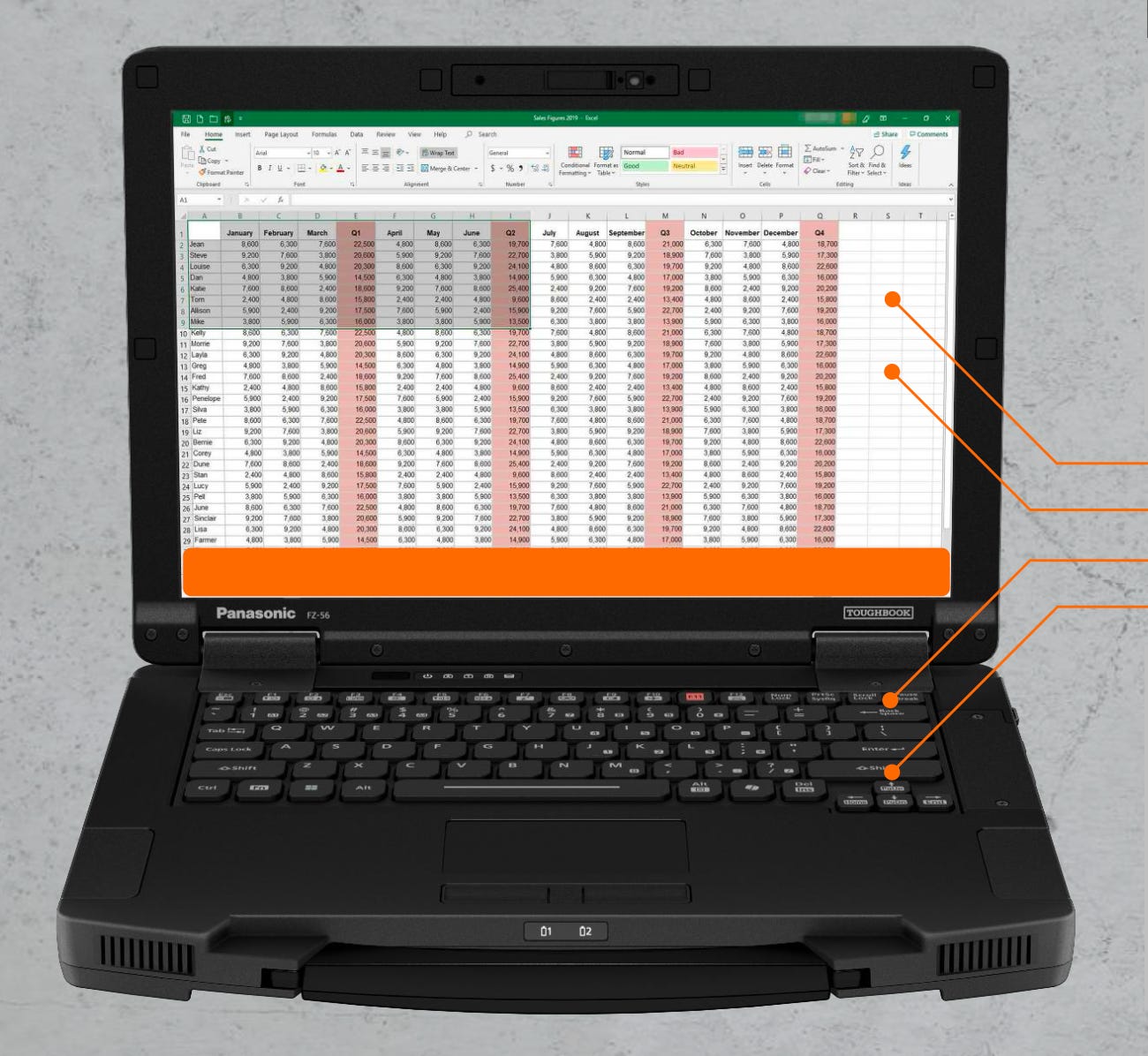
There’s a 16:10 display now instead of 16:9 – a wider aspect ratio (in the vertical sense) that gives field workers more rows of data on screen without scrolling. The touchpad buttons have been recessed rather than flush-mounted, so users can locate them by touch in the dark. The power port door was redesigned from a hinge to a slide to survive the repeated opening and closing that kills doors on multi-year deployments. The handle was re-curved and treated with a material that stays cool in direct sunlight.
All of these changes came from customer feedback, according to Panasonic, and taken together they paint a picture of a company that is unusually rigorous about listening to how its products actually get used.
Who is the ToughBook 56 for?
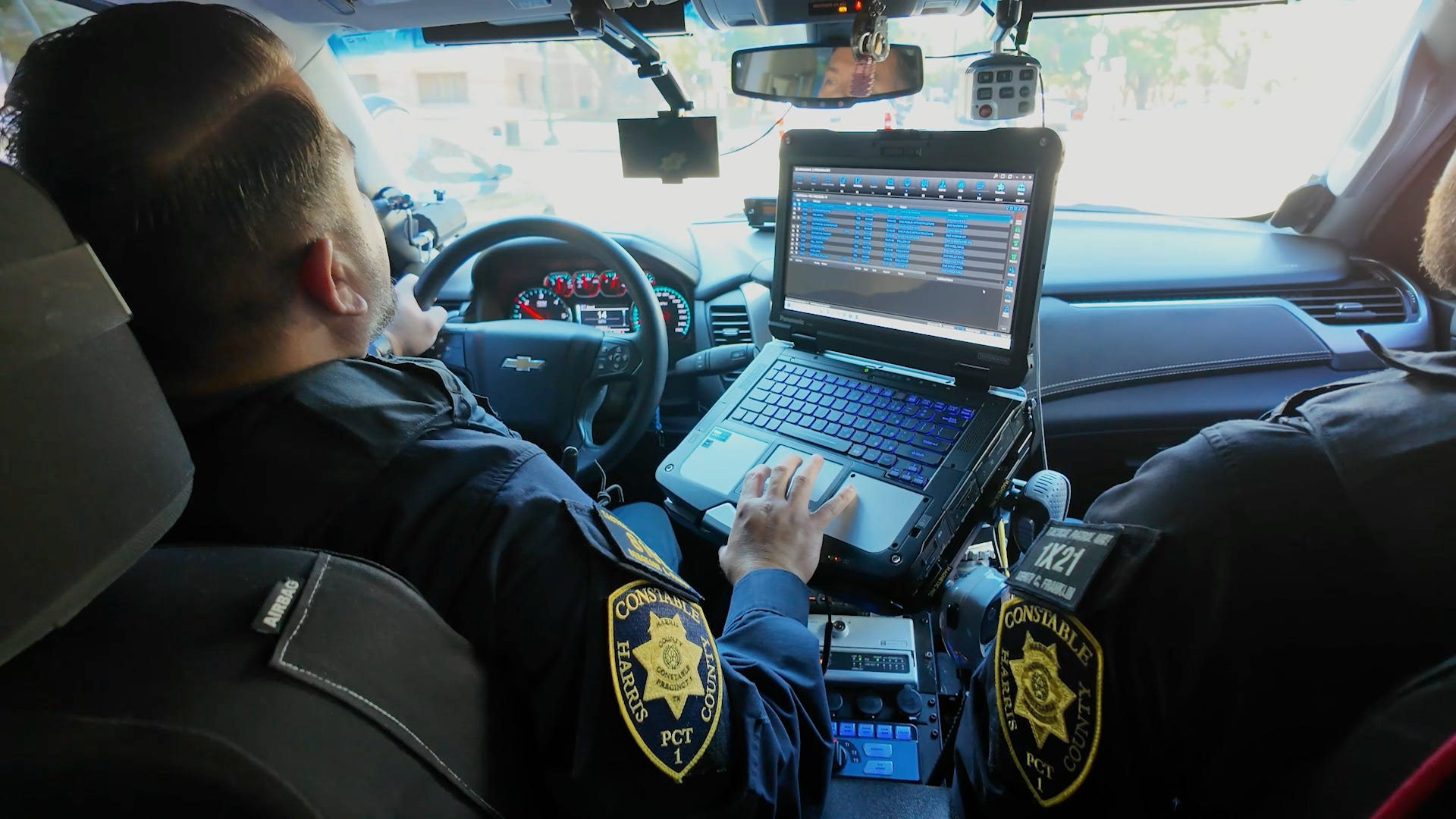
The ToughBook 56 is for a very specific set of readers of The Shortcut. At 4.66 lbs with a magnesium alloy chassis and a full suite of enterprise security features, this is not the laptop you take to a coffee shop.
But here’s why it matters: the ToughBook 56 is a reminder that the laptop category is enormous, and most of the product launches you read about are designed for a relatively narrow slice of it. There are hundreds of thousands of people whose jobs require a computer that can get rained on, dropped, used in a moving vehicle, and connected to a private cellular network – and for those people, no MacBook Air will ever do the job. The ToughBook 56 is built specifically for them, and with this generation, it’s more capable than anything in the rugged category has ever been.