


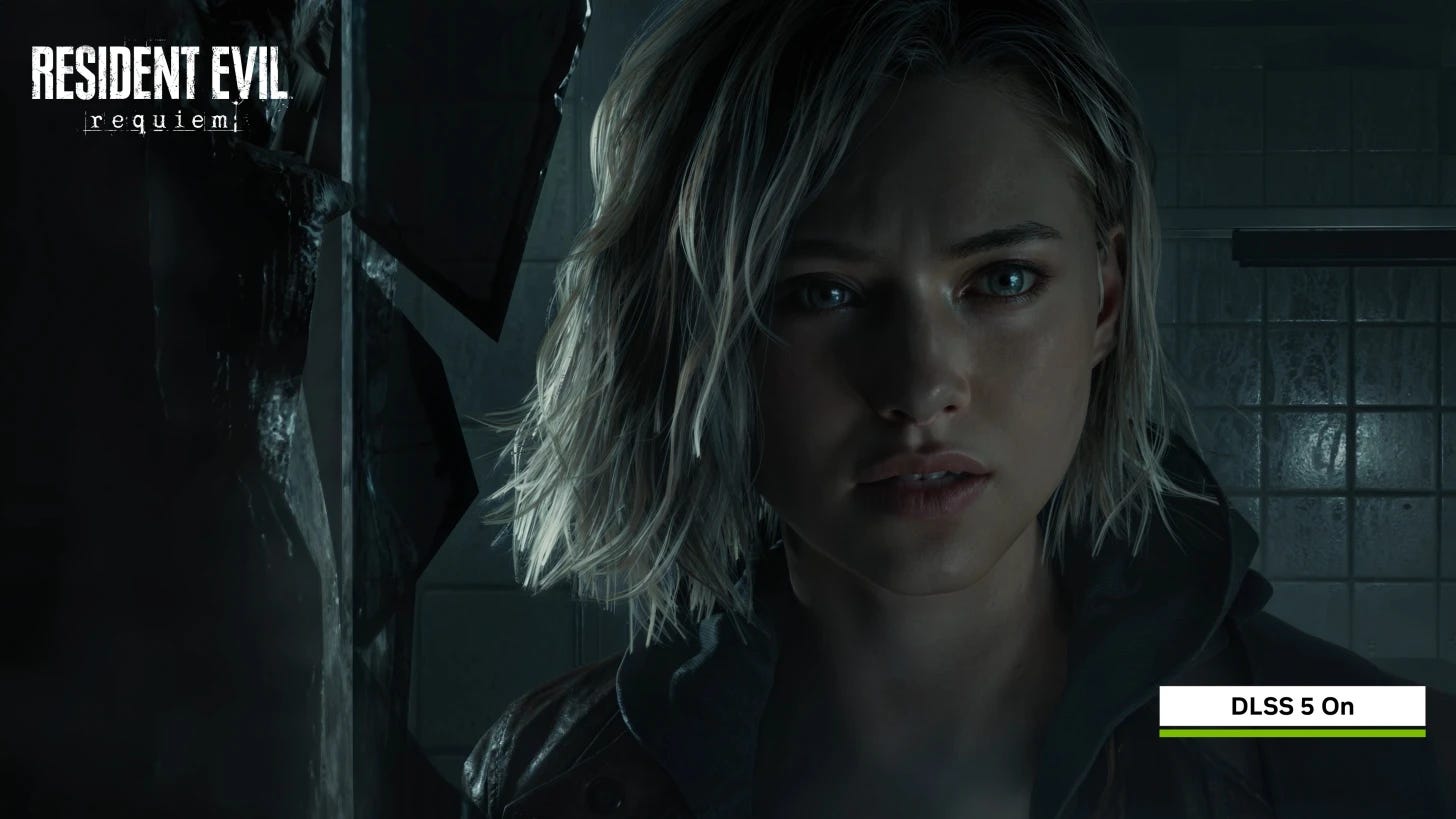

👍 Nvidia has provided more details on DLSS 5 at SIGGRAPH 2026, addressing previous concerns that it acted merely as an “AI beautification filter”
👀 Developers now have access to three distinct DLSS models (A, B, and C) that can be mixed, matched, and switched in real-time without impacting latency
👏 The technology allows for granular control over individual settings like tone and intensity, helping to preserve the artistic intent of games
👄 New masking features allow developers to improve environmental visuals without altering character appearances, addressing criticism regarding artificial or “beautified” faces
It’s been a few months since Nvidia unveiled DLSS 5, its neural rendering upscaler that sparked furious debate online, as people felt it was nothing more than an “AI beautification filter” and “AI Slop”.
However, during the SIGGRAPH 2026 event in Los Angeles, the company provided more details about DLSS 5 that could address gamers’ concerns.
As shown in Nvidia’s keynote live speech at SIGGRAPH below, developers will have plenty of tools at their disposal to tailor DLSS 5 to their liking. For example, game developers can choose between three DLSS models, A, B, or C, which have different levels of structural intensity, global illumination, and texture detail. These can even be mixed and matched, depending on the scene in question, and you can switch between the three models in real-time without affecting latency.
Crucially, the aspect of DLSS 5 that was most criticized was how it affected the artistic intent of a game. Nvidia always said that developers would have control over DLSS 5, so it’s pleasing to see there isn’t one catch-all model, and that individual settings like tone and intensity can also be adjusted to suit the situation.
Masking can also be applied to specific areas of a scene, potentially improving the look of an environment without changing a character’s appearance. It should also stop characters’ faces from looking too artificial or “beautified”, which was the main criticism people aimed at DLSS 5.
Of course, Nvidia still has to prove it can get DLSS 5 running well enough on a single GPU as promised, but it’s at least pleasing to see that developers will have complete control over how they use the new technology. Whether that will be enough to convince skeptics remains to be seen, as the announcement video for DLSS 5 currently has 102k dislikes compared to 19k likes. Ouch.
Up next: I asked a non-gamer what they thought of Nvidia’s DLSS 5 – and it went exactly how I expected
Adam Vjestica is The Shortcut’s Senior Editor. Formerly TechRadar’s Gaming Hardware Editor, Adam has also worked at Nintendo of Europe as a Content Marketing Editor, where he helped launch the Nintendo Switch. He also runs a retro gaming YouTube channel called Game on, boy! Follow him on X @ItsMrProducts.