


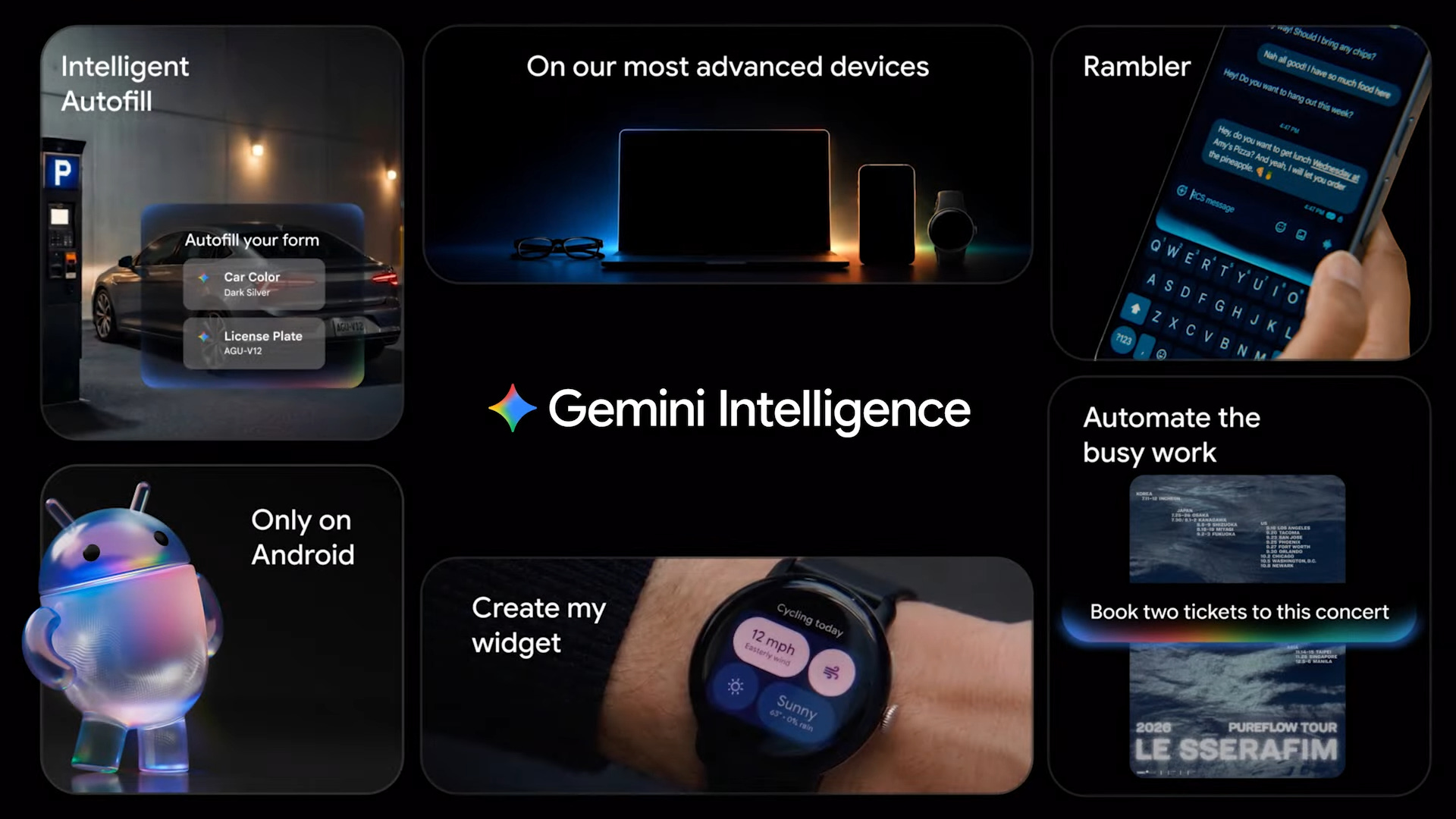

🤖 Google has announced Gemini Intelligence, a more powerful suite of AI features that spans across Android
📲 It offers a more contextual and personalized experience than traditional Gemini
👀 It’s only available on the most premium Android devices
📅 Gemini Intelligence will gradually roll out starting this summer
Google is taking its AI chops up a notch.
Today, the company announced Gemini Intelligence, a more powerful suite of features that brings the best of its AI to the most advanced Android devices out there. It’s a far more contextual, personalized system that can do things on your behalf, generate helpful widgets to keep you informed, and a whole lot more. It’s a big part of Android 17, Google’s next major upgrade for its mobile OS, that’ll be released later this year for Pixel and Samsung Galaxy devices.
🧠 Gemini Intelligence features and capabilities
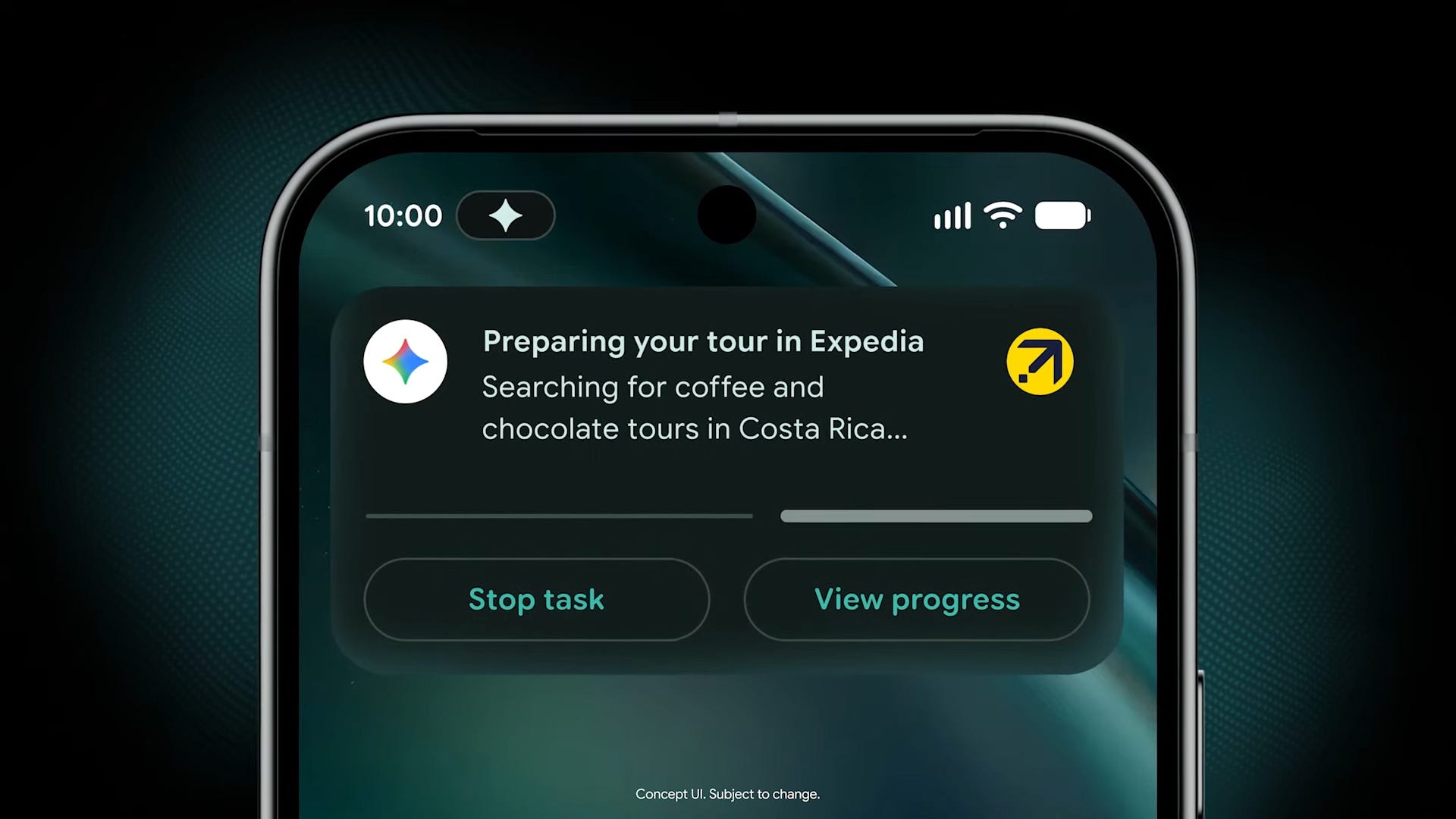
🤖 Automate anything. One of the biggest new features in Gemini Intelligence is the ability to automate almost anything. While Gemini has technically been able to call an Uber or order DoorDash for you, Google is widening the amount of services you can access to automate a far greater amount of things you can do on your phone. For example, you can have Gemini research trips for your entire family based off a picture of a brochure you found in a hotel lobby, or put in an order of groceries based on a list you wrote. It has access to all of your Google account data, too, so if you need Gemini to perform an action based on an email in your Gmail inbox, it can do that.
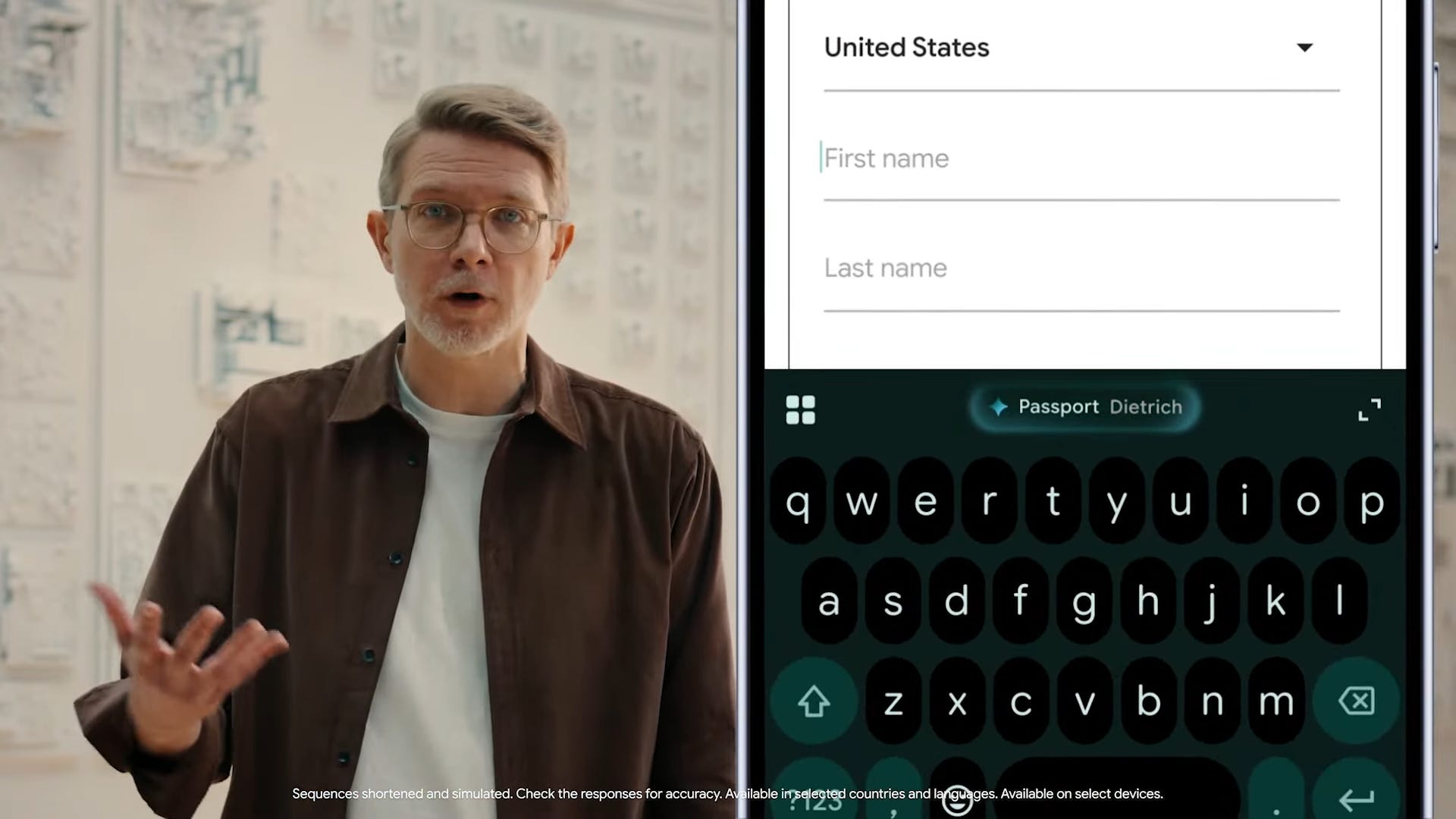
🪄 Mundane tasks, be gone. You can even automate tasks in Chrome with Gemini Intelligence. Google’s new AI can research and summarize topics across the web for you, and you can have it complete tasks like booking a parking spot for a concert you’re attending. Google also highlighted how, when filling out forms, it can present information you have stored in images to fill in each field accordingly, like entering your passport number from a picture of your passport. Gemini Intelligence wants to handle all the mundane stuff you use your phone for, and it sounds like Google’s on the right path to accomplishing that.
🧑💻 Vibe-code your next widget. Widgets have been a huge part of Android since its inception, and now, you can create your own with Gemini Intelligence. When you go to add a new widget to your home screen, you can ask Gemini to make a specific one for you, like particular weather details for riding a bike around town or tracking when a specific stock hits a certain price. The possibilities seem almost endless in Google’s demos. It’s the first time vibe-coding has ever taken shape in such an accessible way.

🗣️ I was born a Rambler man. There’s also a neat new feature part of Gemini Intelligence called Rambler. It’s built into the keyboard as the new way you type with your voice. When sending a text, email, or other type of message, you can use all the “umm’s”, “uhh’s”, and “wait - no’s” you want, jump from topic to topic, and even float between languages, and Gemini will understand what you’re trying to say. Once you’re done talking, it’ll clean up everything you said and give you a message that actually makes sense.
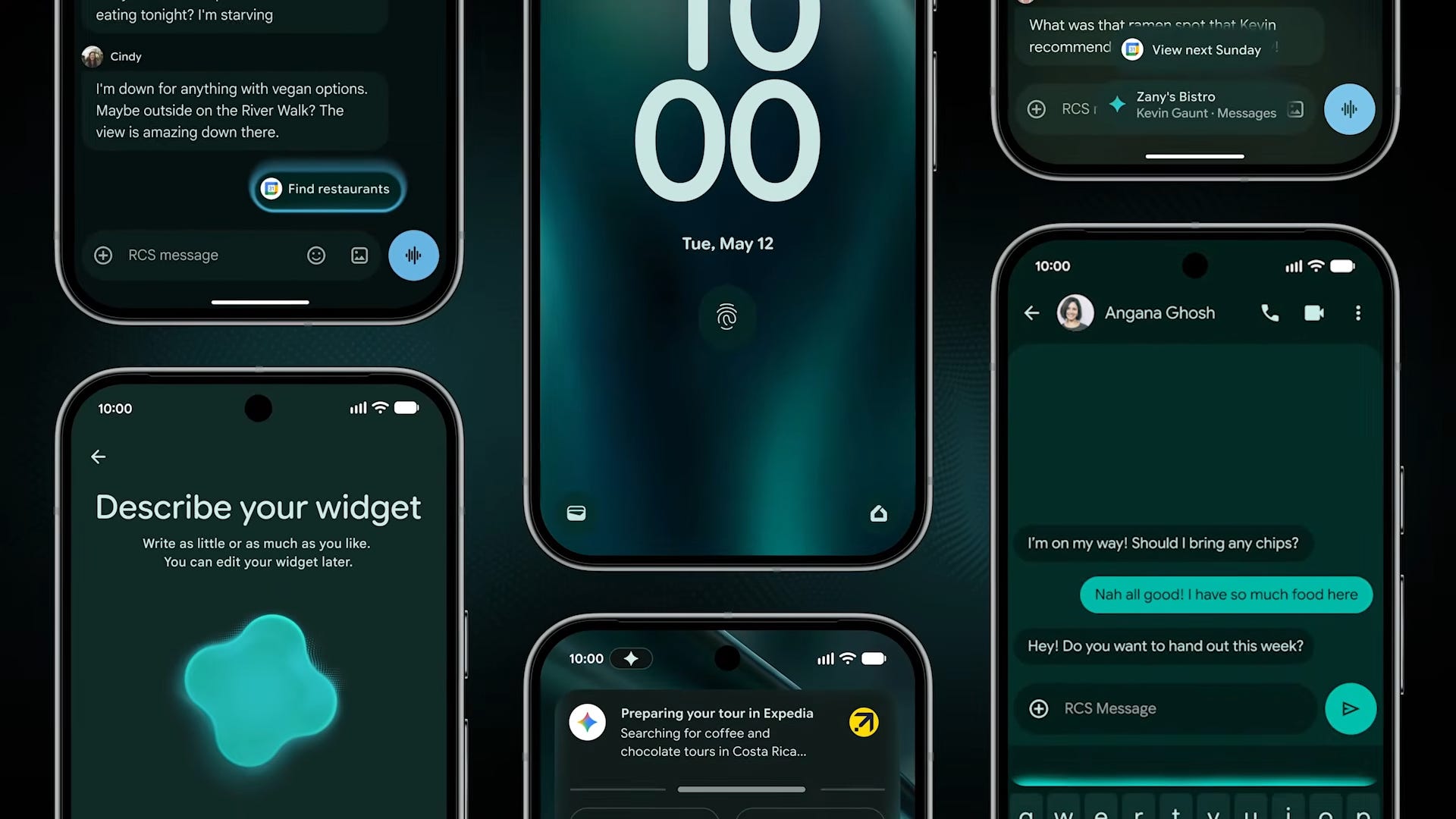
😍 It looks beautiful. Google built a new interface around Gemini Intelligence to highlight it throughout Material 3 Expressive in Android, and it looks stunning. The subtle color gradients and animations give it a lot of life, and everything blends together nicely as you jump between tasks.
🤔 Where is it available?
Google is bringing Gemini Intelligence to top-of-the-line Android devices across categories. It’ll be available on phones like the Pixel 10 and Galaxy S26, Wear OS watches like the Pixel Watch 4, Android Auto (which is getting a big redesign to accommodate), and even laptops like the new Googlebooks.
📅 Coming very soon
Google will roll out Gemini Intelligence features in “waves” to the latest Pixel and Galaxy phones this summer. Then, later this year, it’ll make its way to watches, cars, glasses and laptops.
Max Buondonno is an editor at The Shortcut and co-host of The Shortcut Live. He’s been reporting on the latest consumer technology since 2015, with his work featured on CNN Underscored, ZDNET, How-To Geek, XDA, TheStreet, and more. Follow him on X @LegendaryScoop and Instagram @LegendaryScoop.