




🐷 Google Chrome could be hogging your storage on top of eating your system memory
👾 Reports show the Chrome browser downloads a 4GB local AI model without your knowledge
🦹 Users claim the culprit is a 4GB weights.bin folder that powers on-device Gemini Nano AI models
🤖 This AI model handles operations such as scam detection, autofill, and writing assistance
♻️ Finding and deleting the file is easy, but it could keep coming back with Gemini AI features enabled in Chrome
The Google Chrome browser is already infamous for being a memory hog, and now it could be eating up your storage too.
As per That Privacy Guy!, Chrome has reportedly been installing a 4GB weights.bin file deep in the browser’s directories when certain AI features are enabled. Other users have also claimed to see a similarly sized and type of file buried deep in their PC libraries.
The weights.bin file seems to be connected to Google’s Gemini Nano AI model, which powers Chrome’s AI tools such as scam detection, writing assistance, autofill, and suggestion features. The model is designed to run locally and needs to use training parameters stored on your device, rather than fetching them from cloud-based models.
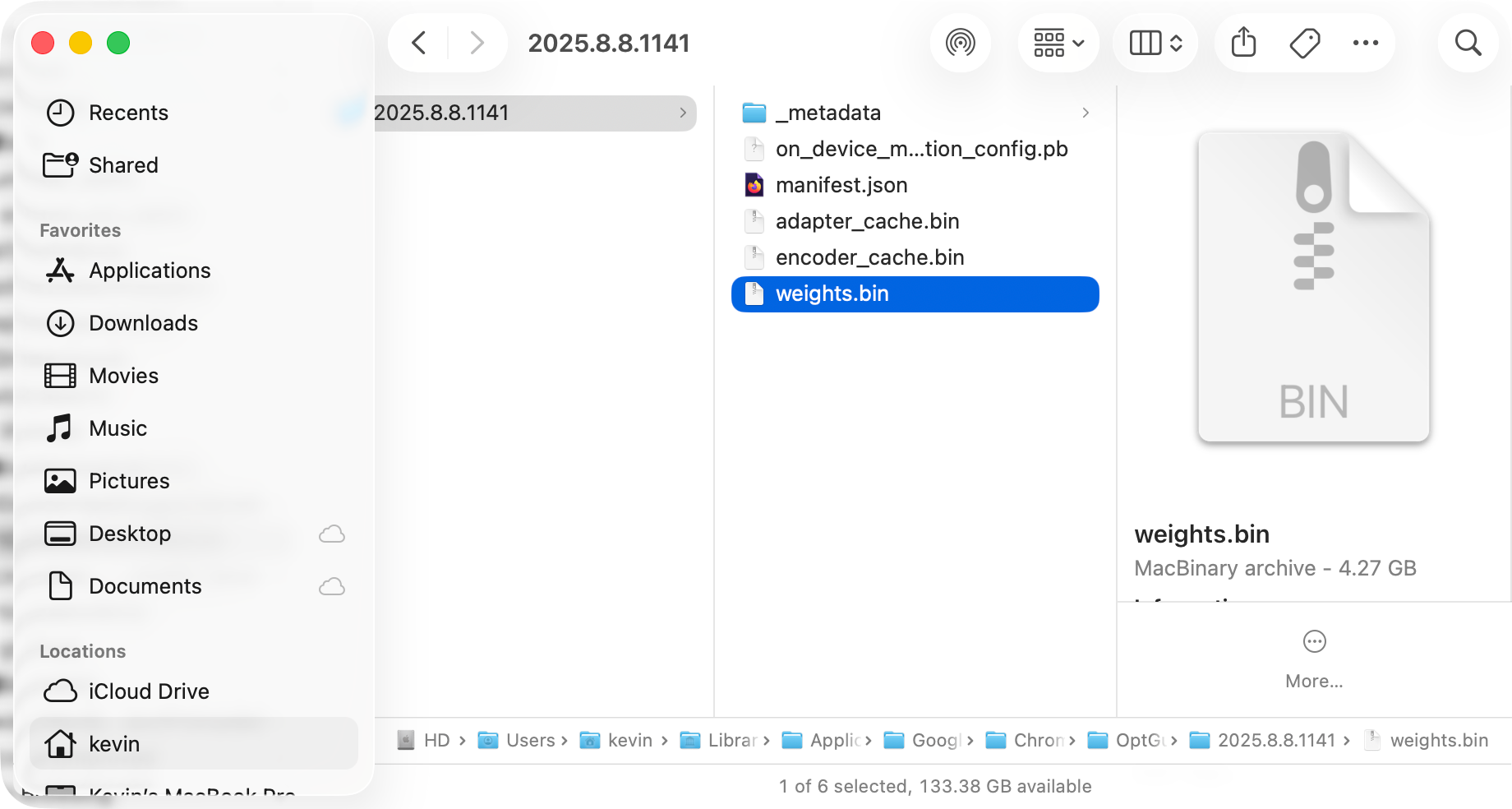
Running these AI models locally is good for privacy, but Chrome doesn’t seem to notify of the file size requirements or ask for explicit permission to download the model locally.
If you’ve used Gemini AI features in Chrome in the past, it’s likely that you already have this 4GB weights.bin file downloaded to your system. If you’re curious, you can check by opening your Chrome data folders and looking at the OptGuideOnDeviceModel directory for the file.

Deleting the file permanently, however, isn’t as easy, as Chrome may download the file again if you continue to have the Gemini AI features enabled. You’ll need to toggle off the On-Device AI option to remove the features and prevent the file from coming back.
A hefty guide from Google on built-in AI reveals that “Gemini Nano’s exact size may vary as the browser updates the model”, although this is a document intended for developers rather than consumers, and Google hasn’t officially acknowledged the file as yet.
Reece Bithrey is a journalist with bylines for Trusted Reviews, Digital Foundry, PC Gamer, TechRadar and more. He also has his own blog, UNTITLED, and graduated from the University of Leeds with a degree in International History and Politics in 2023.