



📈 AMD promises its new Helios and 6th-gen Epyc server CPUs produce 30% more tokens per
⚡ Helios drives higher throughput and per-core performance vs Nvidia Vera Rubin NVL72
🧠 6th-gen Epyc Venice CPUs can pack up to 256 cores, and 40 petaflops of FP4 compute
🤝 Anthropic and OpenAI already lining up for gigawatt-scale Helios deployments
The AI race is getting more expensive every day, with higher RAM prices and blown-out token budgets, but now AMD might have a solution: its new Helios servers and 6th-generation Epyc processors, which promise 30% more tokens per dollar.


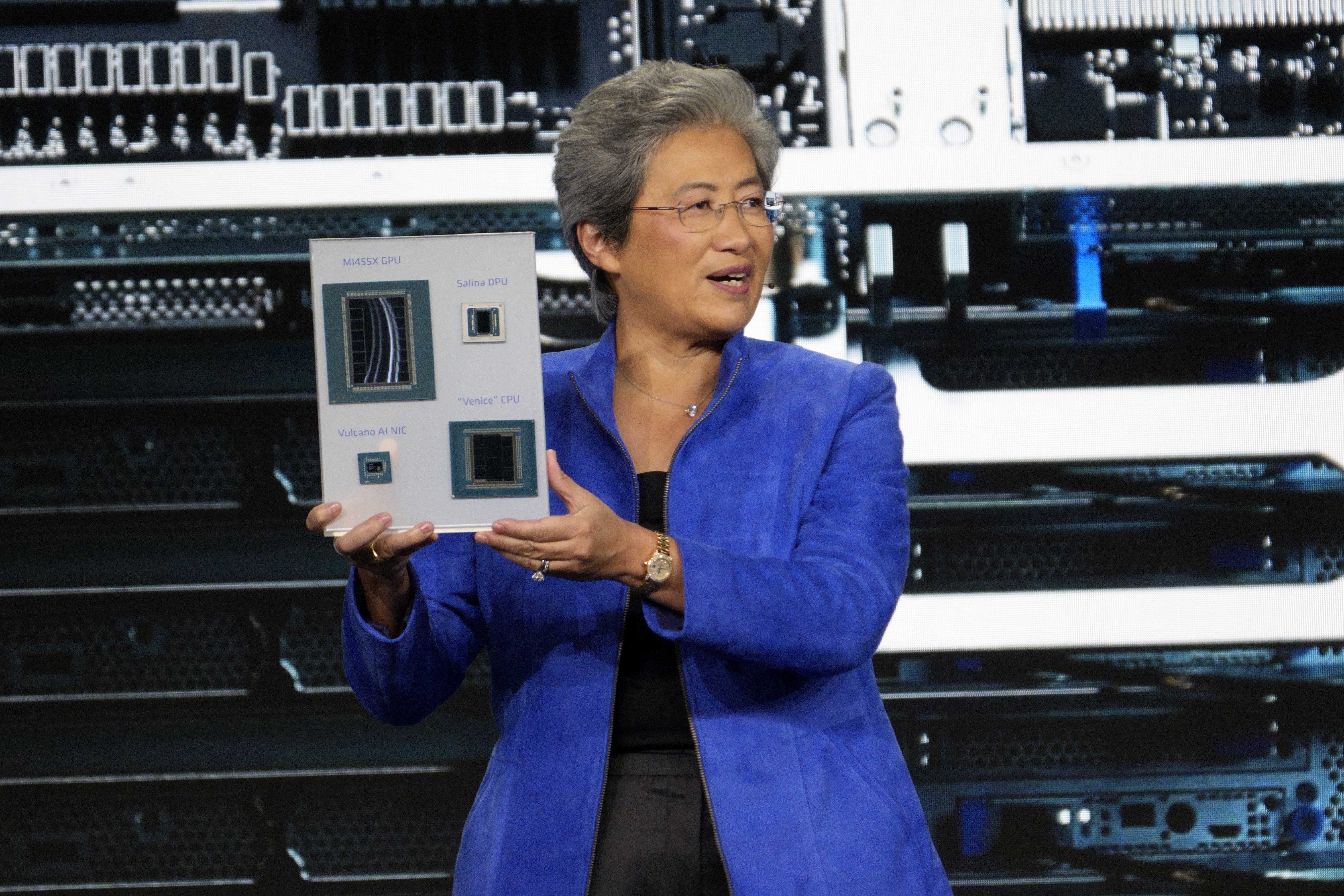
That performance promise isn’t against an old server either; AMD put Helios to the test against Nvidia’s newly deployed Nvidia Vera Rubin NVL72 servers running a Kimi K2 Thinking workload (32K input / 8K output). It’s all thanks to a combination of AMD Instinct MI455X GPUs, 6th Gen AMD EPYC server CPUs, AMD Pensando networking, and AMD ROCm software to support frontier AI.


Of course, the real heart of the AMD Helios is the chip maker’s newly introduced 6th-gen Epyc Venice 9006 Series CPUs with up to 256 Zen 6 cores and 512 concurrent threads that produce 40 petaflops of FP4 compute. It also packs in 432 gigabytes of HBM4 and has a peak memory bandwidth of 23.3 terabytes per second of memory bandwidth per GPU.


AMD Helios and 6th-gen Epyc Venice 9006 Series CPUs will roll out by the 3rd quarter of 2026 , starting with an Anthropic partnership to deploy up to 2 gigawatts of Instinct MI450 Series GPUs in Helios rack-scale systems. OpenAI also announced a partnership with AMD to build out a 6-gigawatt AI factory as well.
Kevin Lee is The Shortcut’s Creative Director. Follow him on Twitter @baggingspam